 rdark
rdarkSilk Road: The Rise and Fall of the First Darknet Market
The Silk Road darknet market was the first of its kind and the blueprint for everything that came after it. From 2011 to 2013 it ran as a Tor hidden service with Bitcoin held in escrow, proving that strangers would trust anonymous escrow to buy and sell drugs at scale, until the FBI arrested its operator and seized 144,336 BTC. If you are searching for a Silk Road link, there is none to find: the market has been dead for over a decade, and the name now belongs to scammers. What follows is the real story, how it worked, how it fell, what became of Ross Ulbricht, and why its lesson still governs the markets running today.
How the Silk Road darknet market worked
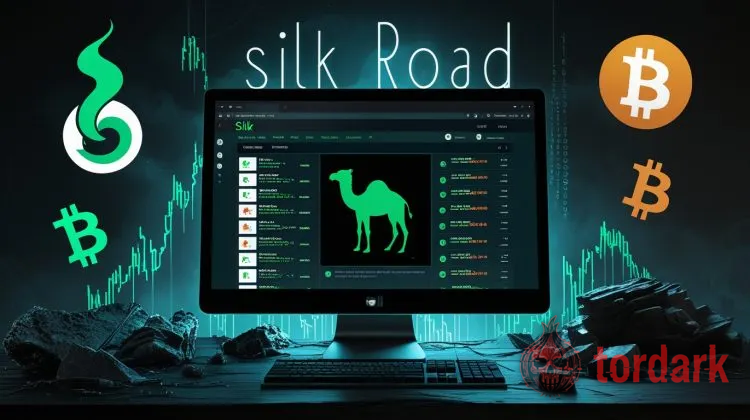
Silk Road launched in 2011 as a Tor-only marketplace that paired anonymous browsing with Bitcoin payments held in escrow, and that combination is what made it feel safe to its users. Buyers funded escrow, vendors shipped, and the market mediated disputes and skimmed a commission, much like a conventional marketplace wearing cryptographic clothing. It was run by an operator who called himself the Dread Pirate Roberts, and over two and a half years it grew into a roughly $1.2 billion bazaar, mostly for drugs, with a vendor-feedback system that taught a generation of buyers to trust reputation scores over real names.
The flaw was never the anonymity layer; it was the assumption that Bitcoin was as private as Tor. Every transaction sat permanently on a public ledger, waiting to be read, and the bigger Silk Road grew the more of that evidence it generated. Its success was therefore also its exposure: investigators never needed to break Tor to build their case, because the money was already on the chain and the man behind the keyboard made ordinary mistakes.
The 2013 arrest and the 144,336 BTC
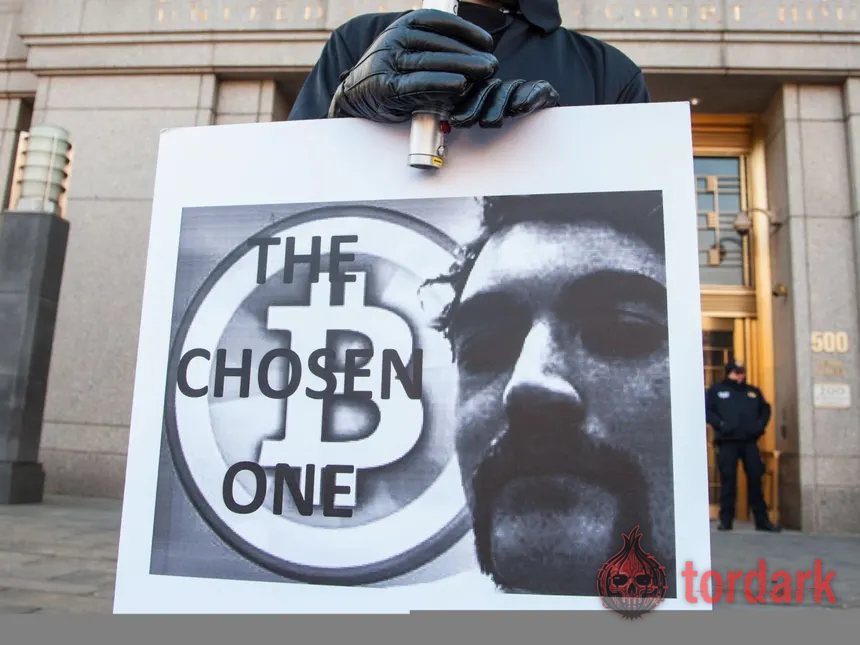
On 1 October 2013 the FBI arrested Ross Ulbricht in the Glen Park branch of the San Francisco Public Library. The timing was deliberate and the staging almost theatrical: agents provoked a distraction so they could seize his laptop while it was open and logged in, because an unlocked machine is admissible evidence in a way an encrypted, powered-down one is not. Caught mid-session as the Dread Pirate Roberts, Ulbricht could not lock the device that held the proof.
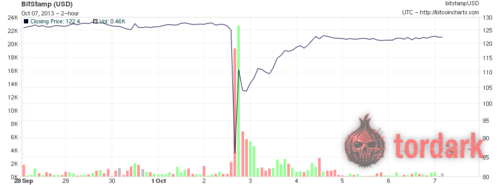
From that laptop investigators recovered 144,336 BTC, on top of an earlier tranche pulled from Silk Road's own accounts. In 2013 dollars the haul was worth tens of millions; at later Bitcoin prices the same coins would be worth well over a billion. The seizure proved publicly, for the first time, that money moving through a darknet market could be followed straight to a person, and it turned a quiet technical truth, that Bitcoin is traceable, into a front-page fact.
Ross Ulbricht: conviction, life sentence, and 2025 pardon
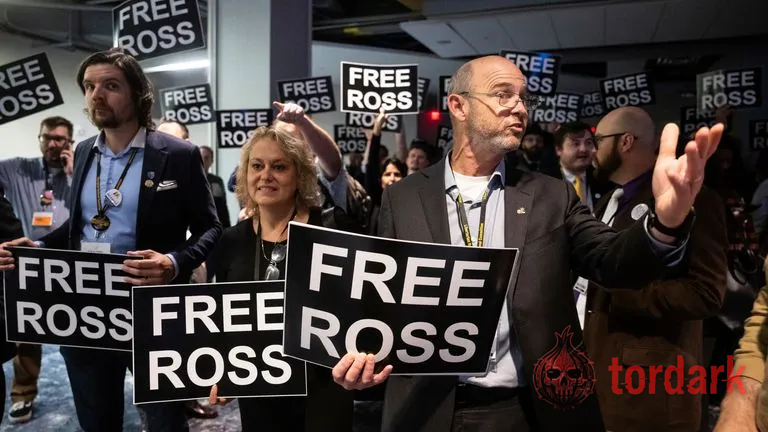
Ulbricht was convicted on 5 February 2015 on seven counts, including conspiracy to traffic narcotics, money laundering, and computer hacking, and on 29 May 2015 he was sentenced to life in prison without the possibility of parole. Uncharged murder-for-hire allegations, never tried in court, hung over the sentencing and hardened it. The severity of a life term for running a website made his case a rallying point for both digital-rights campaigners and criminal-justice reformers, and the "Free Ross" movement, driven for years by his mother Lyn Ulbricht, kept it in public view.
That campaign ended in January 2025, when Ulbricht received a full and unconditional presidential pardon on 21 January and walked free after more than eleven years inside. The pardon closed the personal chapter without touching the technical one: the market was long gone, but the investigative method that killed it had only grown sharper in the years since.
How investigators followed the Bitcoin trail
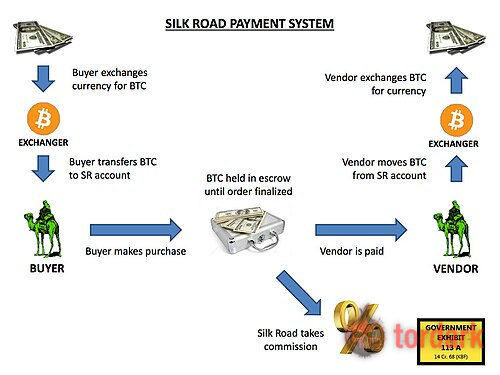
The money trail is what turns Silk Road's fall into a template rather than a one-off. Bitcoin's ledger is public and permanent, so every payment the market ever processed stayed on the chain, available for analysis long after a transaction cleared. Prosecutors could literally diagram the flow, buyer to exchanger to escrow to vendor, as a courtroom exhibit, because the whole system was recorded in the open. Once investigators tied a cluster of addresses to the operation, the coins on Ulbricht's laptop were not just currency; they were a confession written in arithmetic.
The same technique recurred across the cases that followed. Wall Street Market's administrators were caught in 2019 by a reused wallet that linked them to an earlier scam, and Hydra later ran a built-in mixer precisely because plain Bitcoin was so easy for analysts to read. Even Silk Road's own coins kept surfacing: in 2022, authorities recovered roughly 50,000 BTC that a hacker had quietly stolen from the market back in 2012. The blockchain is an evidence archive that never expires, and investigators simply had to learn to read it.
Is there a Silk Road link in 2026?
No, and there has not been a real one since 2013. The original market died with Ulbricht's arrest; Silk Road 2.0 launched weeks later and was itself seized in Operation Onymous in November 2014; and the wave of imitators that followed, Silk Road 3.0, 3.1, Reloaded, and assorted "Silk Road 4" sites, were clones, cash-grabs, or short-lived scams. None of them carry the original's operators or its trust, and none survive in any meaningful form.
That history makes "Silk Road" the single most impersonated name on the dark web. Any "Silk Road link," onion URL, or mirror you encounter today is a phishing page trading on the legend to harvest logins and coins from people who do not know the market has been gone for over a decade. Treat every one of them as hostile, enter nothing, and if you need a market that actually exists, verify a live one from scratch using the alternatives below and a PGP-signed canary.
What replaced Silk Road
No single market inherited Silk Road; the ecosystem instead splintered and rebuilt itself many times over, through AlphaBay, Hydra, and a long list of others now in this archive. The markets operating today are tracked in tordark's verified directory, where general-purpose options like Nexus and TorZon cover the broad catalogue Silk Road once did.
The more important inheritance is a lesson, not a successor. Because Silk Road proved Bitcoin is traceable, the privacy-minded markets that lasted moved to Monero: DrugHub and DarkMatter are reported to refuse Bitcoin outright. Whichever you consider, do the one thing that separates a real address from a clone, confirm it against a signed canary, and keep nothing in escrow beyond an open trade.
Why Silk Road still shapes the dark web
Every privacy decision on the markets that survive today traces back to this single case. The lesson that Bitcoin is traceable pushed serious operators toward Monero, whose ring signatures and stealth addresses break the chain analysis that undid Silk Road; the lesson that an administrator is a human in a jurisdiction pushed them toward stricter operational security; and the lesson that a market is only ever borrowed pushed cautious users toward verifying an address rather than trusting a brand. The first darknet market lost, and in losing it wrote the rules everyone now plays by, which is why anyone weighing a market in 2026 is reacting, knowingly or not, to a weakness Silk Road demonstrated in 2013.
Silk Road: questions people still ask
Is there a working Silk Road link?
No. The original Silk Road was seized by the FBI in October 2013, and Silk Road 2.0 was seized in 2014. Every later site using the name, Silk Road 3.0, 3.1, Reloaded and the rest, was a clone or a scam, and none survive. Any "Silk Road link" or onion URL you find today is a phishing trap built on the most famous brand on the dark web. Do not enter credentials or send funds to it; verify a live alternative instead.
What happened to Silk Road?
The FBI arrested its operator, Ross Ulbricht, on 1 October 2013 in a San Francisco public library, grabbing his laptop while it was unlocked and logged in. The site was seized, and investigators recovered 144,336 BTC from the machine. Ulbricht was convicted in 2015 and sentenced to life without parole, then granted a presidential pardon in January 2025.
Who was the Dread Pirate Roberts?
"Dread Pirate Roberts," or DPR, was the pseudonym used by Silk Road's operator, Ross William Ulbricht. The name was borrowed from The Princess Bride, where the title is passed between people, a fitting cover for an anonymous administrator. Prosecutors tied the handle to Ulbricht through early forum posts and a trail that led back to his real identity.
Was Ross Ulbricht pardoned?
Yes. After serving more than eleven years of a life sentence, Ross Ulbricht received a full and unconditional presidential pardon on 21 January 2025 and was released. The "Free Ross" campaign, led for years by his mother, Lyn Ulbricht, had made his case a cause for digital-rights and criminal-justice reform advocates.
How much Bitcoin did the FBI seize from Silk Road?
The headline figure is 144,336 BTC recovered from Ulbricht's laptop, worth tens of millions of dollars at 2013 prices and well over a billion at later ones, on top of an earlier tranche taken from Silk Road's own accounts. Years afterward, in 2022, authorities also recovered roughly 50,000 BTC that a hacker had stolen from the market a decade earlier, a reminder that the chain never forgets.
What can I use instead of Silk Road?
Only a market whose current address you can verify against a PGP-signed canary. The markets operating now are tracked in tordark's verified directory, and the privacy-minded successors settle in Monero rather than the traceable Bitcoin that doomed Silk Road. Confirm any address against the signature first, and treat anything wearing the Silk Road name as a trap.