 rdark
rdarkHow to Buy Monero Anonymously (No-KYC)
How to buy Monero anonymously is the question that decides whether your privacy survives first contact with the financial system, because the coin is only as private as the way you acquired it. Monero is engineered to hide the sender, the recipient and the amount of every transaction — but if you buy it from an exchange holding your passport, you have handed someone a labelled starting point that no amount of on-chain privacy can erase. The landscape also changed: the big exchanges delisted XMR, so the routes that work now are different from the advice written two years ago. This guide covers why Monero earns the trouble, how it compares to other privacy coins, what actually moves its price, the ways to get it in 2026 — above all how to swap crypto to XMR with no KYC — how to mine it, and how to store it without undoing the whole effort.
Why Monero, not Bitcoin
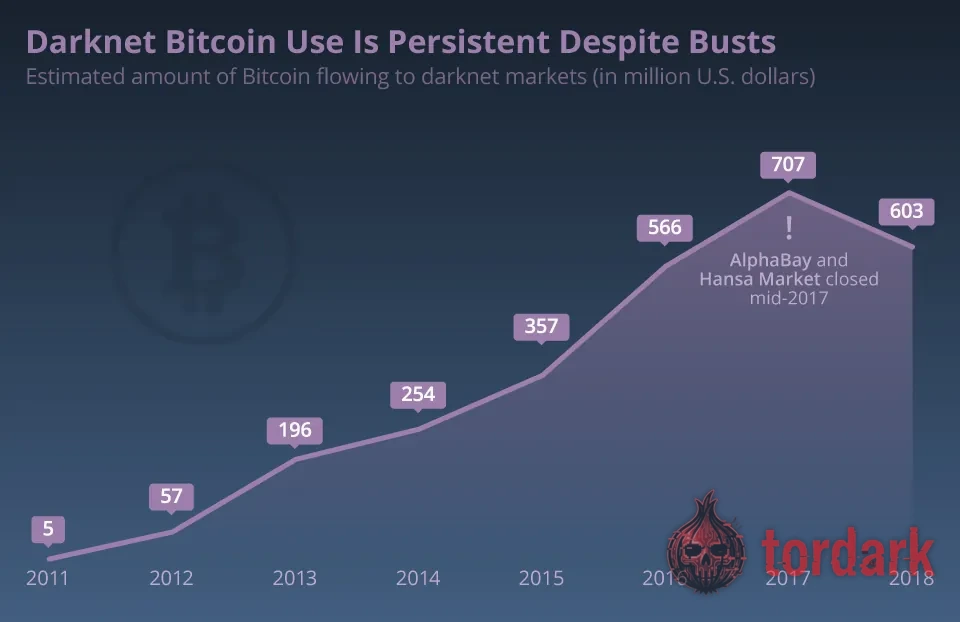
Monero exists because Bitcoin is not private, and the dark web learned that the expensive way. Bitcoin's ledger is public and permanent, so chain-analysis firms can follow coins across years: that is how 144,336 BTC were traced off Silk Road's founder, why Hydra ran a built-in mixer it should not have needed, and why a laundering service like the one in recent dark web news could be unwound by the same ledger it tried to clean. A privacy coin answers a different question: not "who can I trust to mix my coins," but "what if the ledger itself revealed nothing."
Monero builds that in at the protocol level, and three mechanisms do the work. Ring signatures blend each real input with decoys — the ring size is fixed at 16, so every spend hides among fifteen plausible others. RingCT, live since 2017, hides the amount of every transaction. And a stealth address generates a fresh, one-time destination for each payment, so nothing on the public chain links two payments to the same recipient. Crucially, this privacy is mandatory: there is no "transparent mode" to forget to switch on, which is the trap with opt-in privacy coins. The result is that the markets which survive have moved toward Monero-only operation, from White House Market to Archetyp. The privacy is the default, not a feature you remember to enable.
The four ways to acquire Monero
Once you have decided Monero is worth the trouble, the practical question is where to actually get it — and the honest answer is rarely "an exchange you've heard of," because most of the big ones delisted XMR (covered below). Almost every way to buy Monero is a variation on four approaches; a fifth, mining, earns it rather than buying it. The four below are ranked roughly from most convenient to most private — which is also, not by accident, from most identifying to least. There is no single best method; there is the one that fits your starting point and how much anonymity you actually need.
| Method | Start from | KYC? | Privacy | Typical cost | Best for |
|---|---|---|---|---|---|
| No-account instant swap | Other crypto | None for normal amounts | Good | ~0.3–2% | You already hold BTC/ETH/USDT and want speed |
| Atomic swap (BTC↔XMR) | Bitcoin | None | Very high | ~0.1% + network fees | Trust-minimized conversion, no custodian |
| Peer-to-peer / cash | Cash or fiat | None (platform) | Highest | ~5–15% premium (cash) | Starting from fiat with no paper trail |
| KYC exchange, then convert | Fiat (card/bank) | Full | Limited | ~0.5–2% all-in | Convenience over anonymity |
The dividing line is whether your money enters the chain with your name on it. The first three routes never attach your legal identity to the purchase; the fourth does, then tries to weaken the link afterward — useful for ordinary privacy, but never as clean as not creating the link at all. Before drilling into each route, though, two questions settle whether XMR is even the right coin for you and what it is worth: how Monero compares to the other privacy coins, and what actually moves its price.
Monero vs other privacy coins: Zcash, Dash and the rest
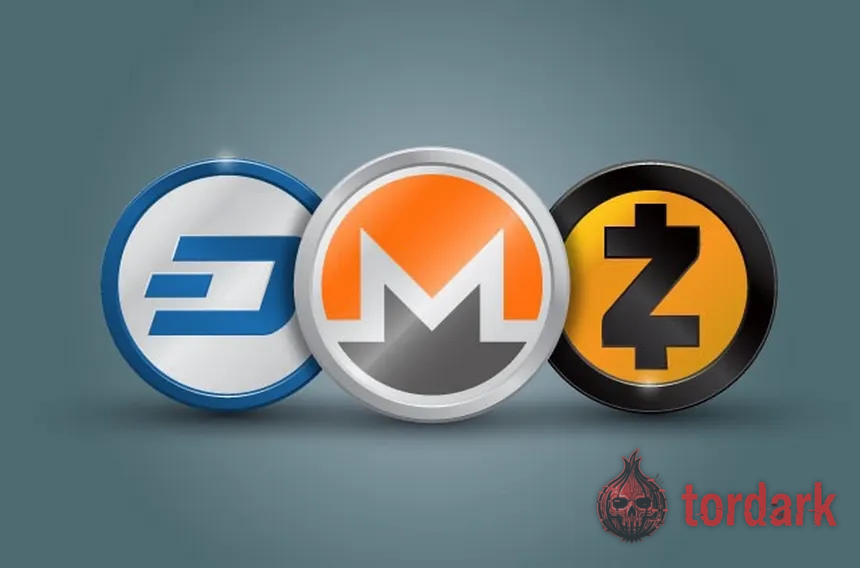
Monero is the best-known privacy coin but not the only one, and "which privacy coin is actually the most private" is a fair question to ask before you commit. The surprising answer is that the differentiator is rarely the cryptography — it is whether privacy is on by default and for everyone. An anonymity set only protects you if most people are actually using it, so a coin where privacy is optional can have brilliant math and weak real-world protection.
- Zcash (ZEC) is the most cryptographically ambitious rival, using zero-knowledge proofs (zk-SNARKs) that can prove a transaction is valid while revealing nothing about it. The catch is that shielding is optional: Zcash has transparent ("t") and shielded ("z") addresses, and for most of its life the large majority of activity sat in the transparent pool, which shrinks the anonymity set for the people who do shield. The math is arguably stronger than Monero's; the default behavior is weaker.
- Dash (DASH) is often listed as a privacy coin but barely is one. By default its ledger is as transparent as Bitcoin's; privacy is an optional "PrivateSend" feature based on CoinJoin-style mixing, which only obscures coins you deliberately mix, and only to a limited degree. Dash itself has leaned into a "digital cash" identity rather than a privacy one.
- Monero (XMR) makes privacy mandatory and universal — ring signatures, RingCT and stealth addresses apply to every transaction, so there is no transparent pool to fall back into, the anonymity set is effectively the whole chain, and every coin is equally fungible, with no "tainted" history a service can single out. That default-on design, more than any single primitive, is why Monero dominates real privacy use.
- The rest, briefly: Pirate Chain (ARRR) enforces shielded zk-SNARK transactions like Monero's mandatory model but with a far smaller user base; Firo uses the Lelantus Spark protocol; Grin and Beam build on Mimblewimble. Each has a serious idea behind it; none approaches Monero's adoption, liquidity or acceptance.
For the use this page is about — acquiring privacy that actually holds up — Monero's combination of mandatory privacy, the largest practical anonymity set and the widest acceptance is exactly why it, not Zcash or Dash, is the coin the surviving markets standardized on. The trade-offs are real: Monero transactions are larger, and it deliberately offers no optional transparency for auditing the way Zcash does. But on the one axis that matters here — privacy you cannot forget to switch on — Monero leads, and every privacy coin draws the same regulatory pressure that caused the delistings, Monero most of all precisely because it works.
If you prefer a walkthrough, there are videos on this topic comparing Monero with Zcash, Dash and the other privacy coins.
Monero price prediction: what actually moves XMR
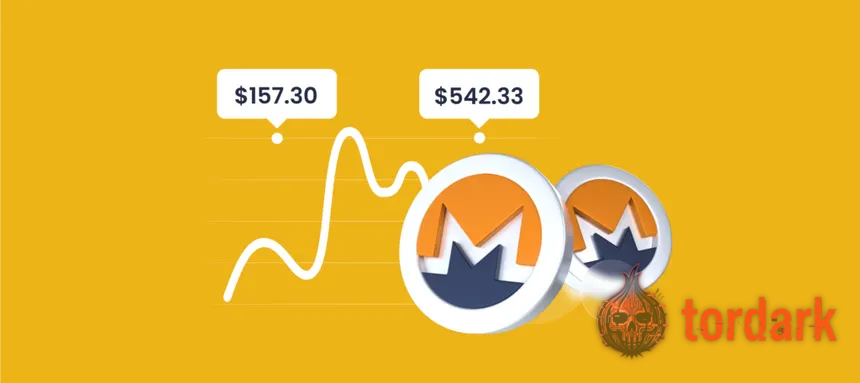
"Monero price prediction" is one of the most-searched things about the coin, and most of what ranks for it is worthless — auto-generated pages confidently forecasting a precise figure for 2026, 2030 or 2040. Treat every one of them as entertainment. No one can predict a cryptocurrency's price, and Monero has quirks that make it even less predictable than most. What is worth understanding is what genuinely moves the price, so you can read the market yourself instead of trusting a number someone invented to fill a page.
- Thin, fragmented liquidity. The same delistings that made XMR hard to buy also pulled it off the high-volume order books where price is normally discovered. With more trading pushed onto P2P venues and no-KYC swaps, prices can be more volatile and can diverge between venues — a structural fact, not a forecast.
- No supply cap, perpetual issuance. Unlike Bitcoin's fixed 21 million, Monero issues a permanent 0.6 XMR per block. The resulting inflation is low and shrinks as a share of total supply over time, but the "digital scarcity" story that drives part of Bitcoin's price narrative does not apply to Monero the same way.
- Demand for working privacy. Monero's price is unusually tied to use rather than speculation. When surveillance tightens or other privacy tools fail, demand for a coin that actually delivers privacy tends to rise — a sturdier base than pure hype, and a reason the price has been comparatively resilient through events that would sink a meme coin.
- Regulation, in both directions. Delistings and bans cut access and can depress the price; yet each crackdown is also a backhanded confirmation that the privacy works, which sustains committed demand. Regulatory news is the single biggest mover, and it genuinely cuts both ways.
So when you see a confident "Monero will hit $X by 2030," ask what it could possibly be based on — there is no model that prices in a delisting wave, a national ban, or a surge in privacy demand with any reliability. The useful posture is the same one the rest of this site argues for: ignore the forecast, watch the inputs, and never hold more on any service than you can afford to have frozen. If you are buying XMR to use rather than to gamble on, the only price that should concern you is the spread and premium on the route you actually use.
How to swap crypto to Monero with no KYC
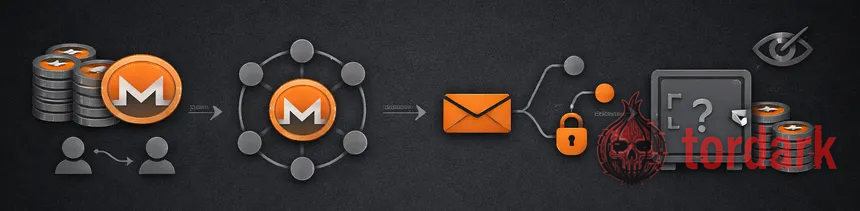
If you already hold any cryptocurrency, swapping it to Monero through a no-KYC service is the fastest and most practical private route, and for most people it is the route — no account, no email, no ID. It is also the one the delistings created: when the big exchanges dropped XMR, an entire ecosystem of no-account swap services grew up to convert one coin into another on demand. Understanding how those services work, and where they quietly fail, is the difference between a clean swap and a frozen deposit.
A no-KYC swap service takes a coin you send and returns a different one to an address you specify, charging a small spread or fee, and you never create an account. Two distinctions decide what you are actually getting:
- Custodial vs non-custodial. Most "instant" swappers are briefly custodial — they hold your coin for the few minutes the trade takes, which is the window in which a deposit can be flagged or frozen. Atomic swaps, covered below, are fully non-custodial: no one ever holds your funds.
- Fixed-rate vs floating-rate. A fixed rate locks the price the moment you start, so you know exactly how much XMR you will receive (for a slightly higher fee); a floating rate settles at the market price when your deposit confirms (cheaper, but the amount can drift). For volatile windows or larger swaps, fixed-rate removes the surprise.
Rather than vet dozens of providers individually, many people use an aggregator. Trocador, for example, searches across many no-KYC services for the best rate, is reachable over Tor, and surfaces each provider's logging, KYC and refund policy so you can choose one that will not ask for identity. Other no-account instant swappers in this category include the likes of ChangeNOW, StealthEX and FixedFloat; an aggregator spreads your exposure across them rather than tying you to one operator's reliability. None of these should be treated as a place to store value — they are a pipe you pass funds through, not a wallet.
The mechanics of an actual swap to Monero are nearly identical wherever you go:
- Set up a Monero wallet you control and copy its receiving address.
- Open the swap service or aggregator over Tor.
- Choose the coin you are sending (BTC, ETH, USDT, LTC…) and Monero as the coin you receive, then pick a fixed or floating rate.
- Paste your Monero receiving address, and — just as important — a refund address you control for the source coin, in case the trade cannot complete.
- Send the exact amount shown to the deposit address, within the quoted time window.
- Wait for network confirmations; the XMR lands in your wallet, usually within minutes.
The convenience comes with real caveats, and they are the reason to go slowly the first time. Because instant swappers are briefly custodial, some will flag or freeze a deposit their chain-analysis heuristics consider "tainted," or quietly demand verification on a large or unusual swap — which defeats the whole no-KYC point. Reduce the odds: keep swaps modest in size, prefer services with a clear no-logs and no-KYC policy and a stated refund process, never send from an address that ties back to your identity, and always set a refund address. And test first — run a small amount through any service before you trust it with more. Treat instant swaps as fast and convenient, not trustless.
For a genuinely trustless conversion, atomic swaps remove the custodian entirely. Using cross-chain swap software, you trade Bitcoin for Monero directly with a counterparty, and cryptography — not a company — guarantees that either both legs complete or neither does, so no service can freeze or seize your coins mid-trade. It is the most private way from BTC to XMR, at the cost of a little more setup and a wait of minutes to about an hour for confirmations on both chains. For anyone whose threat model rules out trusting an intermediary, this is the route, and it pairs naturally with verifying everything yourself, the same discipline as our PGP verification guide.
Starting from cash: peer-to-peer and Haveno
If you are starting from fiat and want the thinnest possible trail, the answer is to buy from another person rather than a company. Peer-to-peer trading is the most private route to Monero, because physical cash leaves no digital record at all: a face-to-face trade is the cleanest, and cash sent by registered mail to a seller holding XMR in escrow is nearly as private and works across distance. Bank-transfer and instant-payment methods are more convenient but progressively less private, since the fiat leg carries your name.
Since LocalMonero closed, the venue that absorbed most of this trade is Haveno — an open-source, decentralized exchange built specifically for Monero. It has no company and no central server to seize or to be forced into adding KYC; it runs over Tor, and every trade is protected by a 2-of-3 multisig escrow shared between buyer, seller and an arbitrator, so no operator ever holds your funds. You are identified only by your payment method, never by documents. Haveno runs as several independent networks rather than one website, and the trade-offs are real: liquidity is thinner than a big exchange, matching is slower, fiat trades carry a premium over the spot price, and you are exposed to the usual P2P counterparty and dispute risk. The escrow mechanic here is the same idea covered in our escrow and multisig guide — worth reading, because understanding how multisig protects you is what lets you use it confidently.
Buying on a KYC exchange, then breaking the link
If a regulated exchange is genuinely your only option, the identity link it creates can be weakened — though never perfectly erased, so be clear-eyed about that. Where XMR is delisted, the standard workaround is two hops: buy a liquid coin or a stablecoin under your real name, withdraw it promptly to a wallet you control, and only then convert to Monero through an atomic swap or a no-account service. The exchange sees that you bought crypto and where you first sent it; it does not see where the Monero went, because Monero's own privacy takes over the moment the conversion completes and the trail goes dark on the receiving end.
Two habits make the difference. Withdraw rather than leaving funds to trade on the exchange, and treat the regulated account strictly as an on-ramp, not a home for value. And put real distance between the hops — a wallet you control sitting between the exchange withdrawal and the swap, rather than swapping straight from the exchange, which would tie the two events together. This is the route for ordinary privacy; it is not the route for someone who needs no link to exist, because the first hop will always carry your name. Reference material on how the coin achieves its privacy is published by the Monero project, and the independent tracing analysis that makes the Bitcoin-versus-Monero distinction more than a slogan comes from firms such as Chainalysis.
Why buying Monero got harder — and where that leaves you
If you went looking for Monero on a mainstream exchange recently and could not find it, you were not imagining things. A wave of delistings reshaped the on-ramps. Binance removed XMR in February 2024; OKX, Kraken in the European Economic Area, and others followed across 2024 into 2026, driven largely by the EU's MiCA regime and similar pressure elsewhere, because the transaction monitoring those rules require is precisely what Monero is built to defeat. The same period took out the venue newcomers leaned on most: LocalMonero, for years the main peer-to-peer marketplace, shut down in 2024.
The lesson is not that Monero is dying — it is that the access model inverted. The very property that gets XMR delisted from compliance-bound exchanges is the one the no-account ecosystem above is built around, so as the front door narrowed, the side doors widened. A delisting is also not a legal verdict: owning and swapping Monero remains lawful in most places, and the moves are regulatory and commercial, not a finding against the coin. A handful of regulated exchanges in some regions still list XMR behind full identity checks, which is fine if privacy is not your aim — but if it is, the delistings simply confirm you should be using one of the no-KYC routes above.
Mining Monero: earning XMR instead of buying it
There is one way to get Monero that involves no seller, no exchange and no prior owner at all: mining it. Freshly mined coins are newly issued, with no transaction history to inherit, which is the cleanest provenance a coin can have — and Monero is unusually friendly to ordinary hardware, by deliberate design. Since a November 2019 upgrade it uses the RandomX proof-of-work algorithm, tuned to run best on the general-purpose CPUs in ordinary computers and to resist the specialized ASIC machines that centralize Bitcoin mining. In practice that means a normal processor can mine competitively and GPUs hold little advantage, which is the whole point: it keeps mining decentralized and open to anyone.
The common setup is the open-source XMRig miner pointed at a pool. A pool combines many small miners so payouts arrive steadily instead of after the years a lone CPU might wait to find a block on its own. For privacy and decentralization the standout is P2Pool, a peer-to-peer mining pool with no operator and no registration that pays directly to your own wallet — so you mine straight into coins you control, with no account anywhere in the chain. Blocks arrive roughly every two minutes.
Be realistic about the economics, though. A single CPU earns very little, and once electricity is priced in, hobby mining is usually a net loss at current difficulty — people do it for decentralization, for privacy-clean coins, or because the hardware is already running, not for profit. Monero's block reward settled into a permanent tail emission of 0.6 XMR per block in May 2022, a small fixed issuance that keeps miners paid indefinitely and means Monero, unlike Bitcoin, has no hard supply cap. One firm caution: Monero's CPU-friendliness also made it the favorite coin for cryptojacking, malware that secretly mines on victims' machines — so only ever run miner software obtained from its genuine open-source project, never a build bundled into some other download. For most readers mining is not a practical way to a meaningful balance; it is slow. But as a way to obtain a small amount of XMR with no KYC, no counterparty and no history, nothing else comes close, and it is the most literal expression of the privacy this whole page is about.
Choosing and setting up a Monero wallet
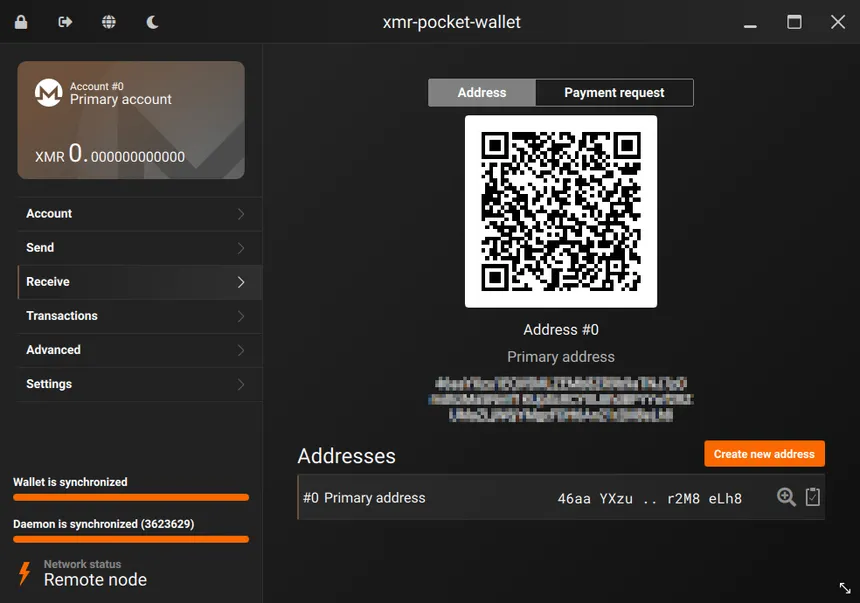
Where the coin lives after purchase matters as much as how you bought it, and it is where a lot of careful acquisitions are quietly undone. Leaving Monero on an exchange or a swap service hands control to a third party that can freeze it, lose it, or be compelled to identify you — which throws away much of the point of using XMR at all. The rule is simple: hold it in a wallet whose keys only you control, and treat any custodial balance as strictly temporary.
Several non-custodial wallets do this well. The official Monero GUI and CLI wallets from the Monero project are the reference implementation and the most conservative choice; Cake Wallet is a popular open-source option across desktop and mobile; Feather Wallet is a lightweight desktop client favored for its simplicity; and Monerujo is the common pick on Android. Any of these is fine — the deciding property is non-custodial control, not the brand. When you set one up it will show you a 25-word recovery seed: write it down offline and keep it somewhere safe, because that seed is the only thing that can restore your balance, and there is no support line to call if it is lost. A wallet you control is the difference between owning the coin and merely holding a claim on someone else's promise.
How much anonymity do you actually need?
With every route on the table, one question quietly decides which is right for you: how much anonymity do you actually need? It has no single answer, and getting it wrong in either direction costs you. Someone who simply dislikes being profiled by exchanges has very different needs from someone whose safety depends on no link existing at all; over-engineering wastes effort and money on fees, while under-engineering leaves a trail you cannot retract. Be honest about which you are before you commit to a route.
For ordinary privacy — you want out of the surveillance machine but no one is hunting you specifically — withdrawing from a regulated exchange into your own wallet and swapping to Monero is usually enough, and it is the easiest path. For higher stakes, where the existence of any link is the risk, the standard is a no-account route from the very first step, with no KYC on-ramp anywhere in the chain and Tor between you and every service you touch. Most readers sit closer to the first case than they assume. Match the method to the actual risk, because every technique here is overkill for some people and nowhere near enough for others.
Spending Monero on a market
A Monero darknet market accepts XMR precisely because it resists the analysis that has unwound Bitcoin-based operations for over a decade. Several markets in the verification directory are Monero-only for that reason, including DrugHub and DarkMatter, and the trend across the surviving markets is away from Bitcoin entirely. The practical consequence for a buyer is that acquiring Monero privately is increasingly a prerequisite rather than an enhancement — but the coin's privacy protects the payment, not the decisions around it.
Two of those decisions sit outside Monero's protection and account for most of what goes wrong. The first is whether you are paying the real address at all: Monero does nothing to stop you sending a flawless private payment to a phishing clone, which is why the address has to clear the operator's signed canary first, the method in our PGP verification guide. The second is how the payment is held once made — direct, escrowed, or in a market wallet that an exit scam can drain. The end-to-end view of how a purchase is meant to work, and where it derails, is the subject of our buyer-safety guide; Monero is one link in that chain, not the whole of it.
The mistakes that undo a private Monero buy
Most blown anonymity here is self-inflicted, and a short list of errors accounts for the bulk of it. None is exotic; each quietly reconnects the identity the rest of the effort was spent severing.
- Buying on a KYC exchange and sending straight to the spend. Withdrawing your purchase directly to a market or a counterparty links your verified identity to the destination in one hop. Always put a wallet you control, and ideally a swap, between the named on-ramp and anything you actually do with the coins.
- Leaving XMR on an exchange or swap service. A custodial balance is one that can be frozen, lost, or handed over on request. Move funds into a non-custodial wallet and treat any service balance as a few-minutes layover, not storage.
- Skipping Tor while arranging the buy. Visiting a swap or P2P site over your normal connection ties your IP to the activity even when the trade itself takes no ID. Route the whole process through Tor, the setup covered in our access guide.
- Reusing one address for everything. While Monero's stealth addresses already prevent outside observers from linking your payments, careless reuse of the same receiving details across services you logged into with your identity can still create links off-chain. Use fresh addresses and keep identities separate.
- Trusting a swap or wallet because it ranked first. Search results and "best no-KYC exchange" lists are heavily seeded by the services themselves. Verify the wallet is the genuine open-source project, start with a small test amount, and never paste a receiving address you have not double-checked character by character.
Anonymity with Monero is a chain of decisions, and the protocol is only the strongest link. Acquire it without your name, store it where only you hold the keys, and the coin does the rest — but one careless hop at either end is all it takes to undo it.
Common questions about buying Monero
Is buying Monero legal?
In most countries, buying and holding Monero is entirely legal; it is a cryptocurrency, not contraband. A wave of regulated exchanges delisted it across 2024–2026 to avoid compliance overhead under rules like the EU's MiCA, which is why no-KYC routes have grown, but a delisting is a business and regulatory decision, not a legal prohibition on the buyer. Large cash trades can trigger local reporting thresholds in some places, and what you subsequently do with any cryptocurrency is governed by the laws that apply to that activity — not to the coin itself.
Why was Monero delisted, and can I still buy it?
Yes, you can still buy it — just not the way most people expect. Major centralized exchanges including Binance, OKX and Kraken's European arm removed XMR across 2024–2026 because its privacy makes the transaction monitoring that regulations such as MiCA demand effectively impossible, and the long-running peer-to-peer marketplace LocalMonero shut down in 2024. What grew in their place is a mature ecosystem of no-account routes: instant crypto-to-XMR swap services, trustless atomic swaps from Bitcoin, and decentralized peer-to-peer markets like Haveno. Acquiring Monero in 2026 means using those rather than a card on a big exchange.
How do I swap Bitcoin to Monero without KYC?
Set up a Monero wallet you control, then use a no-KYC swap service or an aggregator such as Trocador over Tor: choose Bitcoin as the coin you send and Monero as the coin you receive, paste your XMR receiving address and a Bitcoin refund address, send the deposit within the quoted window, and the XMR arrives in minutes. No account, email or ID is needed for ordinary amounts. For a fully trustless conversion with no custodian at all, use an atomic swap instead. Whichever you pick, start with a small test amount, set a refund address, and never send from an address tied to your identity.
What is the most anonymous way to buy Monero?
Cash, peer-to-peer, is the most private route there is: physical cash handed over in person, or sent by mail through an escrowed P2P platform, leaves no digital trail to break. The catch is friction and counterparty risk. For most people the practical sweet spot is one step removed — buy a liquid coin once, then convert it to Monero through a no-account swap or an atomic swap, so no service ever holds both your identity and your XMR. The right answer is whichever matches your threat model, not the most extreme one available.
Can you mine Monero, and is it worth it?
Yes. Monero is designed to be mined on ordinary computer CPUs using the RandomX algorithm, and the open-source XMRig miner pointed at a decentralized pool such as P2Pool will mine directly into a wallet you control, with no account anywhere. Whether it is "worth it" depends on your goal: for profit, a single CPU usually loses money to electricity at current difficulty; for privacy, mining produces freshly issued coins with no prior owner and no KYC, which nothing else matches. Treat it as a privacy tool, not an income stream — and only run miner software from its genuine project, because Monero is the coin of choice for cryptojacking malware.
Is Monero better than Zcash or Dash?
For privacy that holds up in practice, yes — and the reason is default behavior, not cryptography. Monero makes privacy mandatory on every transaction, so the anonymity set is the entire chain and every coin is fungible. Zcash has arguably stronger math in its zk-SNARKs, but its privacy is optional and historically under-used, which shrinks the anonymity set for the people who do shield. Dash is barely a privacy coin: it is transparent by default with an optional mixing feature. Smaller all-private coins like Pirate Chain exist but lack Monero's adoption and liquidity. For acquiring privacy you cannot forget to switch on, Monero leads.
What is the Monero price prediction for 2026?
Ignore any page that hands you a specific number. No one can reliably predict a crypto price, and Monero is harder than most: the exchange delistings thinned its liquidity and pushed price discovery onto P2P and swap venues, it has no fixed supply cap (a permanent 0.6 XMR per block since 2022), and its demand is driven more by privacy utility and regulation than by speculation. Watch those inputs rather than a forecast, and if you are buying XMR to use rather than to gamble on, the only price that should concern you is the spread and premium on the route you actually use.
Does using Monero make me anonymous by itself?
No. Monero protects the transaction — it hides the sender, the receiver and the amount at the protocol level — but it cannot fix a careless acquisition or a careless spend. If you buy it under your real name on a KYC exchange and send it straight to an address tied to your identity, the protocol's privacy is wasted on both ends. Anonymity is a chain of decisions, and the coin is only the middle link.
How long does an atomic swap take?
An atomic swap usually completes in minutes to about an hour, depending on confirmations on both chains, and the software walks you through each step as it happens. The trade-off for that trustless convenience is that you must already hold the source coin, typically Bitcoin, which means one earlier acquisition step. For most users the wait is a small price for converting to Monero with no account and no custodian holding the funds mid-trade.
What is the best Monero wallet?
The one whose keys only you hold. The official Monero GUI and CLI wallets from the Monero project are the reference implementation; Cake Wallet and Feather Wallet are popular open-source options, and Monerujo is the common choice on Android. Any of them is fine as long as it is non-custodial — meaning you, not a service, control the 25-word recovery seed. Leaving XMR on an exchange or a swap service is the one wallet choice to avoid, because a custodian can freeze it, lose it, or be compelled to identify you.