What Is the Dark Web?
The dark web is the small part of the internet you can reach only with a free program called the Tor Browser, where sites are missing from Google and an address is a long string of letters instead of a name you can read. That much is just plumbing. The part that matters is this: on the dark web, an address is easy to fake, so a page that looks exactly right can still belong to a thief. tordark is an independent desk that checks dark-web addresses against the digital signatures their owners publish, and writes down only what those signatures prove. This page explains what the network actually is — and why, here, nothing is trusted on sight.
The dark web, in plain terms
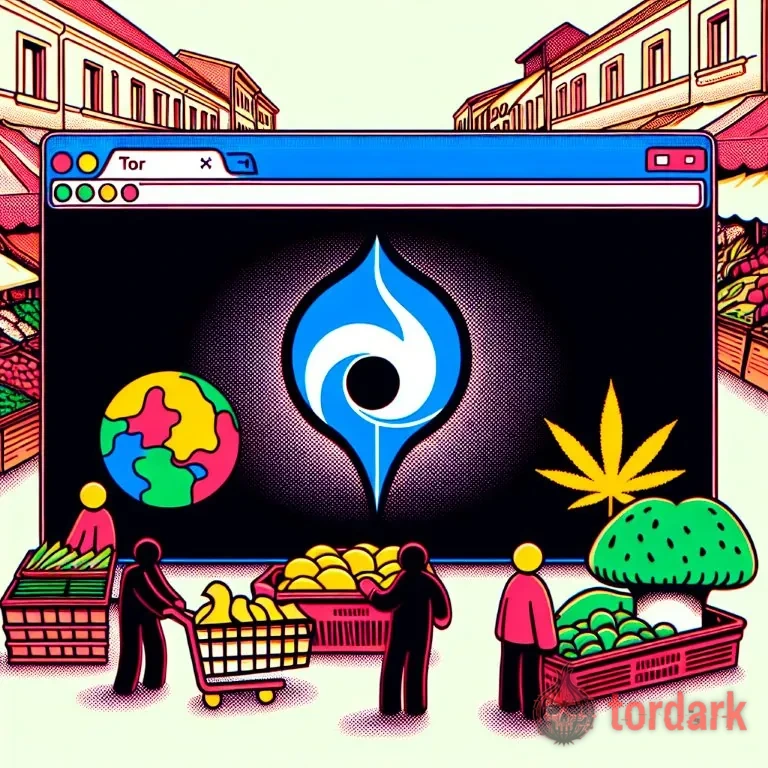
Picture the internet in three layers. The surface web is everything Google can find. Beneath it sits the deep web — your email, your bank, anything behind a login — which is most of the internet and completely ordinary. The dark web is a small, deliberate corner of that hidden layer, built to be reached only through Tor, a browser that routes your connection through several volunteer computers so no single one can see both who you are and where you are going.
What sets a dark-web site apart from a normal one is its address. It is not a name bought from a registrar; it is generated from a secret key and comes out as 56 characters of what looks like gibberish. That design has an awkward side effect. A real address is mathematically tied to its owner, but a thief can register a near-identical one, copy a site down to the last pixel, and wait for someone to mistype or trust the wrong link. This is the single most important thing to understand about the place: a site looking right proves almost nothing, so the dark web runs on proof, not on familiarity.
Getting onto the network is the easy part, and the step-by-step lives elsewhere — start with reaching the dark web safely and setting up Tor Browser. This page stays with the bigger picture: what the place is, who is really on it, and how to keep your bearings.
Who really uses it
The dark web has a fearsome reputation, and some of it is earned: illegal marketplaces are real, and they are the reason most people have heard of it at all. But the network was not built for them, and they are not the whole of it. The same anonymity that shields a drug vendor also shields people with far better reasons to stay hidden.
Major newspapers run dark-web drop boxes so sources can leak documents without exposing themselves. People living under censorship use Tor to reach the open internet their governments block. Whistleblowers, researchers, abuse survivors, and ordinary people who simply do not want to be followed around all use it for the same reason — it separates what you do from who you are. Writing the whole network off as criminal is not only unfair; it is the mindset that gets newcomers hurt, because it makes them careless about the one thing that actually matters here, which is whether the site in front of them is the real one.
As of June 2026 The state of the network
The dark web in 2026
The dark web changes faster than its reputation does, and a few things are true about it right now. Law enforcement treats it as a standing target rather than a series of one-off raids: 2025 alone brought the seizure of Archetyp, one of the longest-running markets, and Operation RapTor, which led to 270 arrests across ten countries. The money has moved too. Most surviving markets now lean on Monero, a cryptocurrency built to hide its trail, after years of arrests were made by following Bitcoin's permanent public ledger. And the impostor problem keeps growing — for any well-known site, the fake copies outnumber the genuine address many times over, seeded wherever beginners go looking.
We keep the running account of all this current. The dark web news desk logs each takedown and scam with its date and source; the closed-market archive is the long record from Silk Road in 2013 onward; and the verified market directory tracks the handful of markets operating now, each address shown beside the signature that confirms it. Read together, they make one point plainly enough: on the dark web, almost nothing lasts, and the only sensible plan is to assume that whatever you are looking at could be gone, or fake, tomorrow.
The takeaway. A site being online tells you it is online, and nothing more. Empire Market was online the day before it disappeared with around $30 million of its users' money; a market called Hansa was online and looked perfectly normal while police quietly ran it and watched every login. Proof has outlasted appearances every single time.
Where to start
If you want to go further, the site is built around one idea: learn the method, then watch it applied. There is no wrong door, and the menu at the top holds all of it.
Begin with the guides — how to reach the dark web safely, how to tell a genuine address from a fake, and why the markets that survive run on Monero — each written so you can read only the parts your situation calls for. When you want to see the method in use, the verified market directory covers what is operating now, the closed-market case studies document what became of everything that is not, and the news desk follows the story as it breaks.
The standard behind this desk
tordark is one researcher's project, not a company and not a marketplace. Everything here is written and kept current by Cass Holloway, who works on privacy and online safety, and the whole point of the desk is to be a source you can check rather than one you have to believe. It carries no advertising, takes no payment for placement, and has no tie to any market it writes about — because a resource whose verdict can be bought is worthless as a check.
Facts here are pinned to the strongest evidence available — court and law-enforcement records first, then the documentation of how the underlying tools are meant to work, then established security reporting — and anything that cannot be is dated plainly or left out. You will not find a single "online now" light anywhere on the site, because we run no monitoring system and will not fake one; claims about the present carry the month they were checked instead. The full standard is set out in about tordark and in how we verify an address.
Common questions about the dark web
What is the dark web in simple terms?
The dark web is a small part of the internet you can only reach with the Tor Browser, a free program that hides which sites you visit. Its pages are not listed by Google, and each address is a long, random-looking string of letters and numbers rather than a normal name. It is a tiny corner of the much larger deep web — everything search engines do not index, like your email or online banking — and most of it is plain text, not the endless bazaar it is made out to be.
Is it illegal to go on the dark web?
In most countries, no. Tor is legal software, and simply visiting the network is not a crime — the same tool is used every day by journalists, researchers, and people living under censorship. What stays illegal is the conduct, such as buying drugs or stolen data, no matter how carefully you reached the site. Our guide to reaching the dark web safely covers the legal and practical risk; the short version is that getting there is lawful in most places, and a great deal of what people do there is not.
Is the dark web dangerous?
The real dangers are not the ones from films. People are hurt most often by scams and by fake copies of genuine sites that quietly take their money, by malware hidden in downloads, and by the legal risk of buying something illegal. You are far likelier to lose money to a convincing clone than to be "hacked" for reading a page. The defense is caution and proof: treat any address you did not verify yourself as hostile until it earns otherwise.
What is the difference between the deep web and the dark web?
The deep web is everything search engines do not index — your inbox, a bank dashboard, a paywalled article — and it is most of the internet, completely ordinary. The dark web is a tiny, deliberate part of it that you can only reach through Tor. All of the dark web is part of the deep web; almost none of the deep web is the dark web.