 rdark
rdarkCrypto Exchangers: No-KYC Swaps, How They Work, and the Best in 2026
A crypto exchanger is a service that converts one cryptocurrency into another without an account, an email, or an identity check — paste a destination address, send your coins, and a different coin arrives minutes later. They are the connective tissue of crypto privacy: the way you move out of a coin a regulated exchange knows you bought into a coin whose ledger reveals nothing, most often Bitcoin into Monero. When the big exchanges delisted privacy coins, an entire ecosystem of no-KYC swappers, aggregators and decentralized exchanges grew to fill the gap, and learning to tell a trustworthy one from a deposit-freezing trap is the difference between a clean swap and a stuck balance. This guide explains what these exchangers are, the best no-KYC exchanges compared, how instant swaps and atomic swaps differ, custodial versus non-custodial and fixed versus floating, how to vet a service, and the mistakes that undo an anonymous swap.
What a crypto exchanger is
A crypto exchanger — the words instant exchange, swap service and swapper all describe the same thing — takes one cryptocurrency you send and returns a different one to an address you specify, charging a small spread or fee, and for ordinary amounts it asks for no account, no email and no identity. That last property is the whole point: a regulated exchange ties every trade to your verified identity, while a no-KYC exchanger is built to convert coins without ever learning who you are.
The distinction that matters most — and the one that separates this guide from its companion on crypto mixers — is that an exchanger hands you a different coin. A mixer keeps you in Bitcoin and tries to scramble its history; an exchanger converts Bitcoin into Ethereum, or USDT, or, most importantly for privacy, into Monero. That conversion is itself a privacy step, because the new coin's trail does not connect on the public ledger to the coin you sent — and when the destination is a privacy-by-design coin, there is no public trail on the receiving end at all. This is why, for most people, a no-KYC exchanger is a cleaner privacy tool than a mixer: it changes the asset rather than merely muddying one that was never built to be private.
The best no-KYC crypto exchanges, compared
People want a shortlist, so here is one — drawn from the services that recur on public privacy directories such as bitmixlist, and split by what each is actually for. Read it as a map to scrutinize rather than a set of endorsements: rankings are shaped by referral incentives, policies change, and the domains are shown in plain text rather than as links precisely because you should reach any service only through a source you have verified. The category in the table matters more than the row order — the privacy specialists keep stricter no-logs postures on Bitcoin-and-Monero pairs, while the higher-liquidity instant exchanges support more coins but are likelier to apply AML checks in rare cases.
| Exchanger | Category | Typical fee | Best for |
|---|---|---|---|
| Trocadortrocador.app | Aggregator | Variable | The best rate across many no-KYC services at once; its own swap guarantee; reachable over Tor |
| Cryptoncrp.is | Never-KYC | ~0.1% | A low-fee privacy specialist for clean BTC and XMR pairs |
| Dex.fodex.fo | Never-KYC | 0.8–1.5% | A Bitcoin-to-Monero focus with a Tor mirror |
| Splash.tfsplash.tf | Never-KYC | No service fee | A BTC/XMR specialist with a Tor mirror and no added fee |
| THORChainSwapthorchain.org | Cross-chain DEX | No service fee | A fully non-custodial swap of native assets, no operator to freeze funds |
| Exolixexolix.com | Instant | Low / none | Deep liquidity and a wide coin range for fast, larger swaps |
| Wizardswapwizardswap.io | Instant | ~2.2% | A privacy-leaning instant swapper with a Tor mirror |
| ChainSwapchainswap.io | Instant | Variable | Broad coin support for cross-chain conversions |
| CCE.cashcce.cash | Instant | Variable | High liquidity across many coins for everyday swaps |
How to read this in practice. If you want the best rate and the safest default, start with an aggregator — Trocador routes across many providers and shows each one's policy, so you are not betting on a single operator. If your goal is specifically a private Bitcoin-to-Monero swap with the strictest posture, the never-KYC specialists like Crypton, Dex.fo and Splash.tf are built for exactly that pair. If you want no custodian at all, the cross-chain DEX route (the THORChain ecosystem) and atomic swaps are the most robust. The higher-liquidity instant exchanges — Exolix, Wizardswap, ChainSwap, CCE.cash — give you more coins and depth, with the caveat that breadth and liquidity are exactly where occasional AML checks appear. One honest signal worth weighing: the big consumer-facing swappers such as Changelly and ChangeNOW are deliberately left off these privacy directories over a poor community reputation for withholding funds — an exclusion that tells you more than any inclusion. Whichever you pick, the next sections are how you use it without getting burned.
How an anonymous swap works, step by step
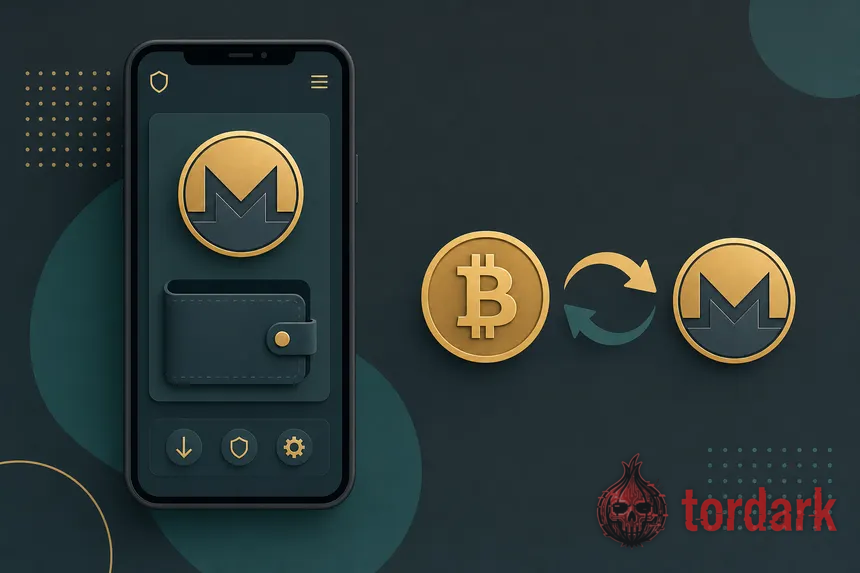
Whatever service you choose, the mechanics are nearly the same, and the discipline around them is what keeps a swap from going wrong:
- Set up a wallet you control for the coin you want to receive, and copy its receiving address. Never swap into an address held by a third party.
- Open the exchanger over Tor, so your IP is not tied to the activity even though the trade itself takes no ID.
- Choose the pair and the rate — the coin you are sending, the coin you want, and whether you want a fixed or a floating rate.
- Paste two addresses: your receiving address for the new coin, and — just as important — a refund address you control for the coin you are sending, in case the trade cannot complete.
- Send the exact amount shown to the one-time deposit address, within the quoted time window.
- Wait for confirmations. The new coin lands in your wallet, usually within roughly eight to twenty-five minutes, dominated by the sending coin's confirmation time — a Lightning deposit can settle in under a minute.
The single step people skip is the refund address, and it is the one that matters when something goes wrong. If a floating-rate quote moves outside tolerance, or the deposit arrives late, or the service flags it, the refund address is your only route back to your coins. For the Monero-specific version of this flow — wallet choice, the privacy ranking of each route, and atomic swaps in detail — our guide to buying Monero anonymously walks through it end to end.
The four kinds of exchanger
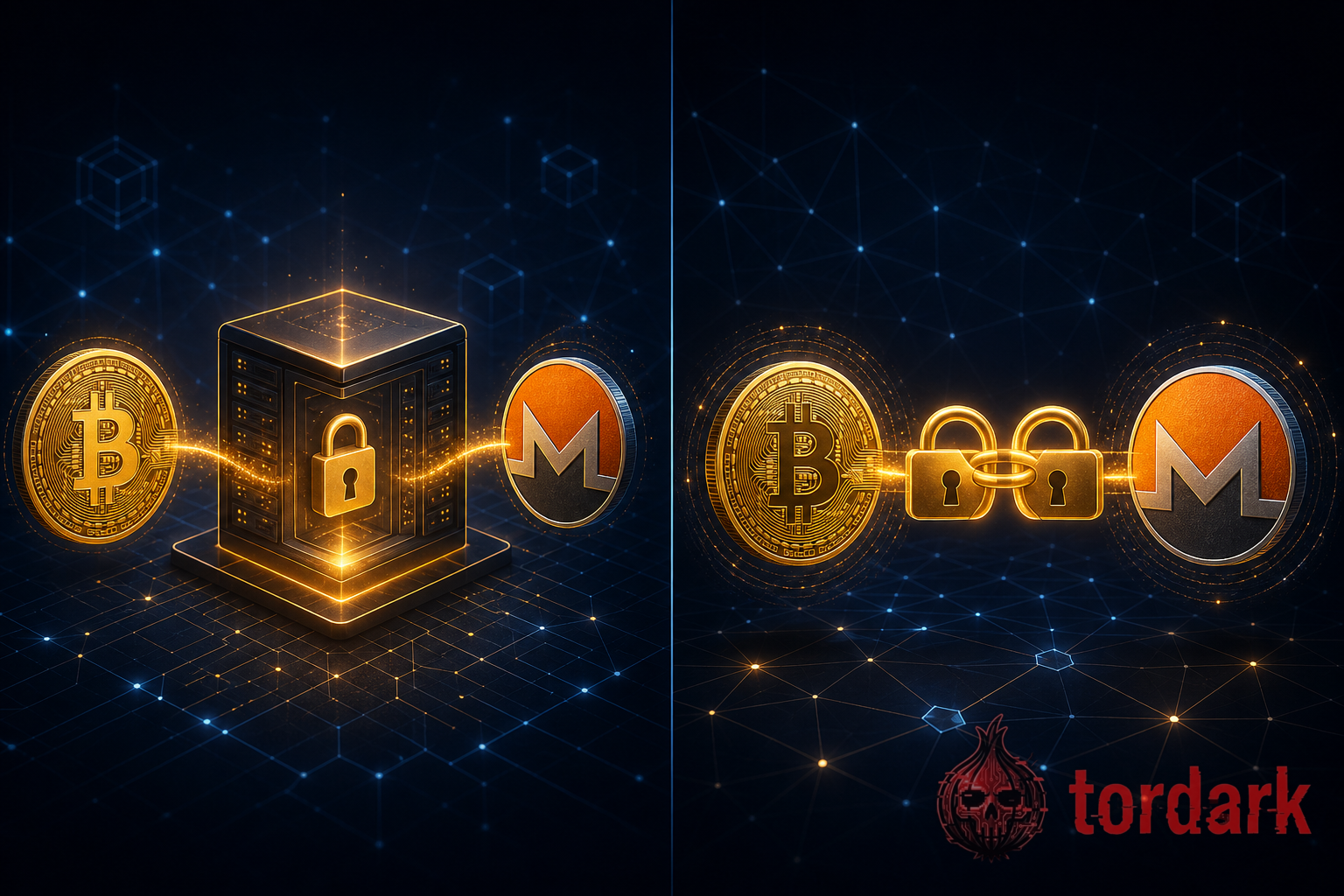
"Exchanger" covers four designs that differ mainly in who, if anyone, holds your coins during the trade — and that custody question predicts the risk.
- Instant swap services are the common kind: a service takes your coin into temporary custody, converts it, and sends the other coin to your address, no account needed. Fast and simple, with the widest coin support, but custodial for the few minutes the trade takes — the window in which a deposit can be flagged or frozen.
- Atomic swaps are trustless. Cross-chain software trades one coin for another directly with a counterparty, and cryptography guarantees that either both legs complete or neither does, so no service ever holds your funds. The strongest design against custody risk, at the cost of more setup and needing to already hold the source coin.
- Cross-chain DEXs such as the THORChain ecosystem use bonded liquidity pools to swap native assets across chains without a custodian and without wrapped tokens. They sit between instant swaps and atomic swaps — non-custodial, but with their own liquidity and slippage characteristics.
- Peer-to-peer marketplaces match you directly with another trader, with escrow holding the trade rather than a company. Decentralized P2P venues like Haveno run over Tor with multisig escrow and identify you only by your payment method — the most sovereign route, and the slowest, with thinner liquidity and a premium.
The cleaner the custody story, the lower the freeze-and-seize risk and the more setup it asks of you. Most people start with an instant swap for convenience and graduate to atomic swaps or a DEX when the stakes — or a frozen deposit — make the custody risk feel real.
Custodial vs non-custodial, fixed vs floating
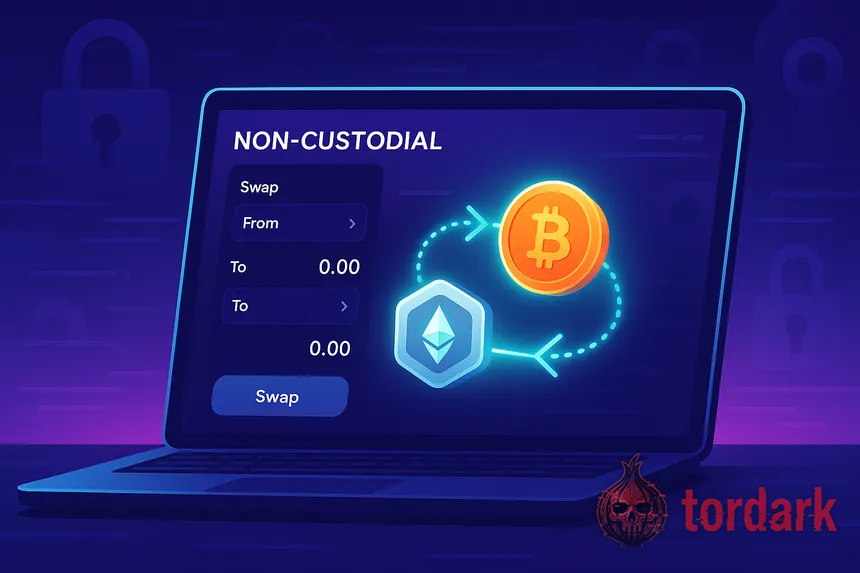
Two choices decide what you are actually getting from any swap, and both are worth a deliberate decision rather than accepting the default.
Custodial vs non-custodial is the safety axis. A custodial instant swapper briefly owns your coins, which is convenient but is exactly the moment a chain-analysis flag can freeze them or an operator could misbehave. A non-custodial route — an atomic swap or a cross-chain DEX — never holds your funds, so there is nothing to freeze or seize mid-trade. If your priority is that no one can interrupt the swap once it starts, non-custodial is the answer, and you accept a little more friction for it.
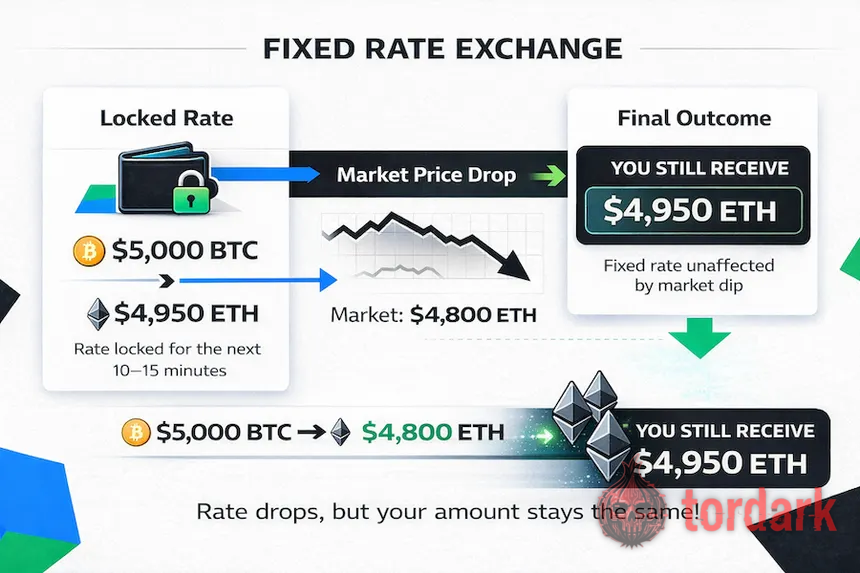
Fixed vs floating rate is the cost-versus-certainty axis. A fixed rate locks the price the moment you start — you know exactly how much you will receive — and the lock typically holds for around ten minutes, for a slightly wider spread. A floating rate settles at the market price when your deposit confirms: cheaper, but the final amount can drift while you wait. For small, fast swaps, floating is usually fine. For larger amounts, a jumpy market, or a coin with slow confirmations, fixed removes the surprise and is worth the premium. Neither is "better" in the abstract; the right pick depends on whether certainty or cost matters more for that particular trade.
No-KYC does not mean no risk
"No-KYC" describes the front door, not a guarantee about everything behind it, and the gap is where people get caught. The most common surprise is automated AML risk-scoring: many instant exchangers, even ones that advertise no identity checks, quietly run incoming deposits through chain-analysis tools, and if your coins are flagged as "high risk" — traced to an exploit, a sanctioned entity, a mixer, or a darknet market — the service can pause the swap and demand verification mid-trade. The result is the worst of both worlds: a no-KYC service that suddenly asks for ID, with your funds stuck until you comply or claim a refund.
Two related risks round out the picture. The first is "soft-KYC" creep: services that started fully anonymous sometimes add account requirements or verification thresholds over time, so a swapper that was clean a year ago may not be today — a reason to re-check a service's current policy rather than rely on its reputation. The second is the ordinary custody and phishing risk shared with any service: a custodial swapper can in principle misbehave while it holds your coins, and clone domains of popular exchangers are common, so reaching the genuine site matters as much as choosing it. None of these makes no-KYC exchangers a bad tool — they are a far better-behaved category than custodial mixers — but "no-KYC" is a starting policy to verify, not a promise to trust blindly.
How to vet a no-KYC exchanger
Because the category rewards judgment, a short checklist separates a service worth using from one to avoid. Run any candidate — including the names compared above — through it before you send a coin.
- A clear, current no-logs and no-KYC policy. Look for an explicit statement, and prefer services that disclose how they handle flagged deposits. An aggregator that surfaces each provider's policy makes this far easier than checking one by one.
- A stated refund process. Know in advance what happens if a swap fails, and confirm the service supports a refund address. No refund path is a red flag.
- Reachability over Tor and a verifiable domain. A genuine onion mirror and a domain you can confirm against an independent source reduce the phishing risk that ends most bad swaps before they start.
- Reputation that is earned, not bought. The community memory on forums matters; notably, some of the largest mainstream-adjacent swappers are excluded from privacy directories for poor reputation on withholding funds, which is more telling than any "best rate" badge.
- A small test first. Run a modest amount through any new service before trusting it with more — the cheapest insurance there is.
Aggregators: one front door to many services
For most people the smartest first move is not to pick a single exchanger but to use an aggregator. An aggregator runs no liquidity of its own; it queries many separate no-KYC services at once, routes your swap to the best executable rate, and surfaces each provider's logging, KYC and refund policy so you can choose one that will not ask for identity. The payoff is two-fold: a competitive rate without personally vetting a dozen services, and exposure spread across operators rather than concentrated in one.
Trocador (trocador.app) is the established example — reachable over Tor and running its own guarantee system for swaps routed through it. Its own service notes carry exactly the kind of operator-specific warning that makes an aggregator useful: it advises against selecting certain underlying providers known to withhold funds even after verification, the sort of field intelligence a lone swapper cannot give you. Use an aggregator as a smart front door to the no-KYC market, but hold the same rule that applies to every service here — it is a pipe you pass funds through, never a wallet to leave value in. The moment a swap completes, the new coin should be in a wallet you control, not sitting on the service.
Exchanger vs mixer: which do you actually need?
These two tools are constantly confused, and picking the wrong one is how people take on risk for nothing. The clean distinction:
- A crypto mixer keeps you in the same coin and tries to break its on-chain history — Bitcoin in, Bitcoin out. It is custodial in its common form, carries a "mixer taint" that compliance systems flag, and is the most legally fraught tool in this field. The full treatment is in our crypto mixers guide.
- A crypto exchanger converts you into a different coin. Convert into a privacy-by-design coin like Monero and you sidestep both the pooling and the mixer fingerprint, because the receiving coin has no public trail to obscure in the first place.
For the large majority of privacy goals, converting to Monero through a no-KYC exchanger is the simpler and structurally stronger move — it changes the asset to one that is private by default rather than muddying one that never was. A mixer earns its place only when staying in Bitcoin is a hard requirement. It is no coincidence that the surviving markets in our verified directory standardized on Monero rather than Bitcoin mixing, and that the closed-market record is full of Bitcoin operations unwound through the transparent chain a mixer was meant to hide. Choose by the goal: change the coin, or scramble its history — rarely both.
The mistakes that undo an anonymous swap
Most lost privacy on a swap is self-inflicted, and a short list of errors accounts for nearly all of it. Each quietly rebuilds the link the swap was meant to break.
- Swapping straight from or to a KYC exchange. Sending a coin directly from your verified exchange account into a swap, or the swap output straight back to one, ties your identity to the trade in a single hop. Put a wallet you control between the named account and the swap.
- Skipping the refund address. Without it, a failed or out-of-tolerance swap can leave your coins stranded with no clean way back. Set one every time.
- Reaching the service over your normal connection. Visiting a swapper without Tor ties your IP to the activity even when the trade takes no ID. Route the whole process through Tor.
- Trusting a clone because it ranked first. Search results and "best exchange" lists are seeded by the services themselves and by phishing operators. Confirm the domain against an independent source, and read the full address before you send.
- Leaving the coins on the service. An exchanger is a pipe, not a wallet. Move the output into non-custodial storage the moment the swap completes, exactly as our Monero guide and buyer-safety guide press.
Privacy is a chain of decisions and the exchanger is only one link. Convert through a no-KYC route over Tor, set a refund address, verify the domain, and move the output into a wallet you control, and a swap does its job — but one careless hop at either end is all it takes to undo it.
Common questions about crypto exchangers
What is a crypto exchanger?
A crypto exchanger — also called an instant exchange, a swap service or a swapper — converts one cryptocurrency into another without an account, usually in minutes. You choose the pair, paste the address where you want the new coin delivered, send your coins to a one-time deposit address, and the service sends back the other coin minus a small fee. Unlike a regulated exchange, a no-KYC exchanger asks for no email, no identity and no registration for ordinary amounts. The crucial difference from a mixer is that an exchanger gives you a different coin, not a scrambled version of the same one — which is why it is the standard route for moving Bitcoin into a privacy coin like Monero.
How does an anonymous crypto swap work?
The mechanics are nearly identical wherever you go. Set up a wallet you control for the coin you want to receive and copy its address; open the exchanger over Tor; choose the coin you are sending and the coin you want, and pick a fixed or floating rate; paste your receiving address and a refund address for the coin you are sending; send the exact amount shown to the deposit address within the quoted window; and wait for network confirmations, after which the new coin lands in your wallet, usually within roughly eight to twenty-five minutes. No account is created at any point. The refund address is the step people skip and regret — it is your only path back if the trade cannot complete.
What is the best no-KYC crypto exchange?
There is no single best one, and the right choice depends on what you are optimizing for. If you want the best executable rate and the widest provider choice, an aggregator like Trocador searches many no-KYC services at once and shows each one's logging and KYC policy. If you want a privacy-first specialist for Bitcoin-to-Monero, smaller never-KYC services focused on that pair tend to keep stricter no-logs postures. If you want a trustless conversion with no custodian at all, an atomic swap or a cross-chain DEX is the strongest design. Names that recur on privacy directories include Trocador, Exolix, Wizardswap and ChainSwap among instant exchanges, and Crypton, Dex.fo and Splash.tf among never-KYC specialists — but vet any of them yourself rather than trusting a ranking.
Is a no-KYC exchange safe, and can my deposit be frozen?
Safer than a custodial mixer, but not risk-free, and the freeze risk is the one to understand. Most instant exchangers are briefly custodial — they hold your coins for the few minutes the trade takes — and during that window some run automated AML risk-scoring on your deposit. If your incoming coins are flagged as "high risk" (for example, traced to an exploit or a darknet market), the service may pause the swap and demand verification, which defeats the no-KYC purpose and can leave funds stuck. Reduce the odds by keeping swaps modest, choosing services with a clear no-logs and no-KYC policy and a stated refund process, always setting a refund address, and testing with a small amount first. A fully non-custodial atomic swap removes the freeze risk because no service ever holds your coins.
What is the difference between an instant swap and an atomic swap?
An instant swap is run by a service that briefly takes custody of your coins, converts them, and sends the other coin back — fast and easy, but you trust the operator for those minutes, and the deposit can be flagged or frozen. An atomic swap is trustless: cross-chain software trades, say, Bitcoin for Monero directly with a counterparty, and cryptography guarantees that either both legs of the trade complete or neither does, so no one can freeze or seize the funds mid-trade. Atomic swaps and cross-chain DEXs are the most private and the most robust against custody risk; the trade-off is a little more setup and the need to already hold the source coin. For trust-minimized conversion, atomic swaps win; for speed and convenience, instant swaps do.
Fixed rate or floating rate — which should I choose?
A fixed rate locks the price the moment you start the swap, so you know exactly how much you will receive, in exchange for a slightly wider spread; the lock usually holds for around ten minutes. A floating rate settles at the market price when your deposit confirms, which is cheaper but means the final amount can drift up or down with the market while you wait for confirmations. For small, fast swaps a floating rate is usually fine and costs less. For larger amounts, a volatile market, or a coin with slow confirmations, a fixed rate removes the surprise and is worth the small premium. The right answer is whichever matters more to you for that trade: certainty or cost.
Do I need KYC to swap Bitcoin to Monero?
No. Swapping Bitcoin to Monero is the most common no-KYC swap there is, and it needs no account, email or ID for ordinary amounts. Set up a Monero wallet you control, open a no-KYC exchanger or aggregator over Tor, choose Bitcoin to send and Monero to receive, paste your XMR receiving address and a Bitcoin refund address, send the deposit, and the Monero arrives in minutes. For a fully trustless version with no custodian, use a Bitcoin-to-Monero atomic swap instead. The XMR-specific walkthrough, including wallets and the routes ranked by privacy, is covered in depth in our guide to buying Monero anonymously.
What is a swap aggregator like Trocador?
An aggregator does not run its own liquidity; it searches across many separate no-KYC exchange services at once and routes your swap to the best available rate, then surfaces each provider's logging, KYC and refund policy so you can pick one that will not ask for identity. The advantage is twofold: you get a competitive rate without vetting a dozen services individually, and you spread your exposure across operators rather than tying yourself to one. Trocador is the best-known example, reachable over Tor and running its own guarantee system for swaps routed through it. Treat an aggregator as a smart front door to the no-KYC market, not as a place to store value — like any exchanger, it is a pipe you pass funds through, not a wallet.
Is using a no-KYC crypto exchange legal?
In most countries, swapping cryptocurrency you own for another cryptocurrency is legal, and wanting to do it without surrendering your identity is a legitimate privacy choice. The legal nuance sits with the operators rather than the user: running an exchange service can require money-transmitter licensing in some jurisdictions, which is why many no-KYC swappers operate from elsewhere or as non-custodial software. As always, what you do with crypto is governed by the laws that apply to that activity — converting funds to launder the proceeds of crime is illegal regardless of the tool, while swapping lawfully held coins for privacy is not. Check your local rules, especially around tax reporting, before relying on any route.
Exchanger or mixer — which do I actually need?
It depends on whether you want to change the coin or just scramble its history. A mixer keeps you in the same coin (Bitcoin in, Bitcoin out) and tries to break the on-chain link, accepting custody risk and a "mixer taint" that compliance systems flag. An exchanger converts you into a different coin — most usefully a privacy coin like Monero — which sidesteps both the pooling and the mixer fingerprint, because a coin that is private by design has no public trail to obscure. For most privacy goals, converting to Monero through a no-KYC exchanger is the simpler and stronger move; a mixer is mainly for when you must remain in Bitcoin. The two tools are complementary, not interchangeable, and confusing them is how people take on risk they did not need.