 rdark
rdarkCrypto Mixers and Bitcoin Tumblers: How They Work, and the Best in 2026

A crypto mixer is a service that tries to do for Bitcoin what Bitcoin does not do for itself: break the public link between where a coin came from and where it ends up. Because the blockchain is a permanent, open ledger, every payment is traceable forever — so an entire industry of mixers, tumblers and blenders grew up to muddy that trail by pooling many people's coins and handing back different ones. They are also the single most legally fraught tool in this whole field, the standard instrument of laundering and therefore the standard target of prosecutors. This guide explains what a mixer actually is, how the custodial, CoinJoin and smart-contract varieties work, where each fails, the honest legal picture after the Tornado Cash and Samourai cases, how mixers compare to simply using Monero, and which services people rely on — alongside the reasons most readers should think twice before using one at all.
What a crypto mixer is
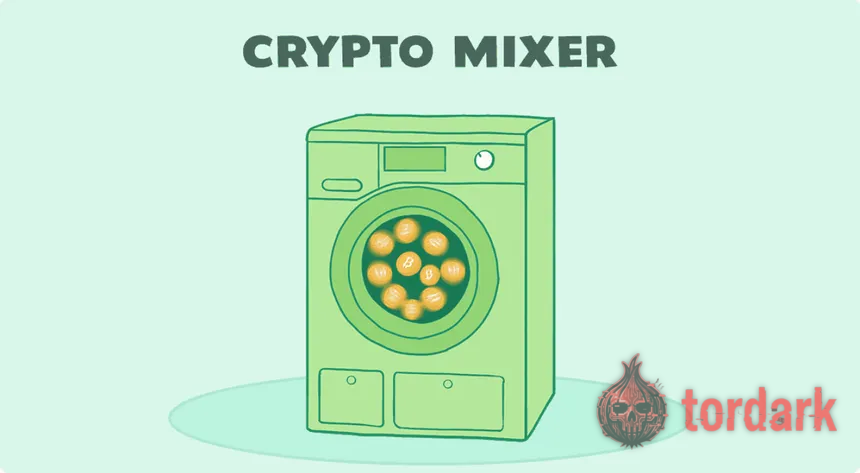
A crypto mixer — equally called a tumbler or a blender, the three words mean the same thing — is a service that obscures the origin of cryptocurrency by combining it with funds from many other users. The need arises from a property people often misunderstand about Bitcoin: it is not anonymous, it is pseudonymous, and its ledger is public and permanent. Every transaction ever made is visible to anyone, and chain-analysis firms make a business of following coins from address to address across years. A mixer is the after-the-fact attempt to sever that link.
The mechanism is the same idea in every variation. You hand the mixer coins with a traceable history; those coins are pooled with everyone else's; and you receive back an equivalent amount of different coins, whose path to you no longer connects on-chain to where your money started. The key point — and the one that separates a mixer from the exchangers covered in the companion guide — is that a mixer returns the same kind of coin you put in. You send Bitcoin and you get Bitcoin back; what changes is the history, not the asset. An exchanger, by contrast, gives you a different coin. That distinction decides which tool fits which goal, and it is the first thing to get straight.
The best bitcoin mixers, compared

People searching for the "best bitcoin mixer 2026" want a list, so here is one — with a warning attached that matters more than the list itself. These rankings are heavily seeded by the services being ranked; affiliate payouts, not independent testing, drive most "top mixer" pages, and a custodial mixer's reputation can reverse overnight. The names below recur on public privacy directories such as bitmixlist; they are presented as the landscape to scrutinize, not as recommendations, and the domains are listed in plain text rather than as links precisely because you should reach any such service only through a source you have verified yourself. The colour of each track-record tag is the quickest read: blue marks the long-lived names, red the newest, where an exit scam is cheapest to run. Several are also powered by shared back-end infrastructure (the Jambler platform), so a clean front end does not guarantee an independent operator.
| Mixer | Track record | Coins | Typical fee |
|---|---|---|---|
| Mixer.moneymixer.money | Since 2016 | BTC | 4–5% + fixed |
| Mixtummixtum.io | Since 2018 | BTC | 4–5% + fixed |
| Coinomizecoinomize.biz | Since 2019 | BTC | 1–5% + fixed |
| Anonymixeranonymixer.com | Since 2020 | BTC | 1–2% |
| Mixeromixero.io | Since 2022 | BTC | 0.7–4.7% |
| DreamMixermixerdream.com | Since 2022 | BTC | 3.5% |
| Thormixerthormixer.io | Since 2023 | BTC | 4% |
| JokerMixjokermix.to | Since 2024 | BTC, ETH, LTC | Variable |
| Mixer.Blackmixer.black | Since 2026 | BTC + altcoins | 1.9% |
What should you actually read from a table like this? Mainly longevity and transparency. The oldest names — Mixer.money (2016), Mixtum (2018), Coinomize (2019) — have the longest track records of paying out, which in a trust-only business is the closest thing to a signal, though it is never a promise about tomorrow. A clearly published fee, a stated no-logs policy and a verifiable letter of guarantee are baseline; the absence of any of them is a red flag. The newer multi-coin entrants such as JokerMix and Mixer.Black widen support beyond Bitcoin, but a short history is exactly when an exit scam is cheapest to run. And one name on these directories is flagged outright as a scam, a reminder that inclusion on a list is not vetting. Treat the whole category as high-trust, high-risk, and weigh whether you need it at all before the non-custodial alternatives — CoinJoin and Monero — covered further down.
How a bitcoin mixer works

For the common custodial mixer, the process needs no account and only a few steps. You open the mixer, give it the destination address where you want clean coins delivered, and it shows you a one-time deposit address; you send your coins there. Those coins join a large, constantly churning pool fed by every other user. After a delay you set or the service randomizes, the mixer pays you out — an equal value, minus its fee — from unrelated coins in the pool, frequently split into several payments of randomized sizes sent at randomized intervals. The splitting and delays are deliberate: a single round-number payout that appears moments after your deposit is trivial to link, so good mixers scatter the output across amounts and time to defeat that pattern-matching.
Two design choices govern how much privacy you actually get. The first is the size and liquidity of the pool: mixing into a deep, busy pool hides your coins among thousands of others, while a thin pool can leave your withdrawal obviously correlated with your deposit. The second is whether the service keeps logs. A custodial mixer technically sees both ends of every mix, so its no-logs policy is a promise, not a guarantee — and a promise that can be broken voluntarily, by a hack, or under legal compulsion. This is the structural weakness behind every custodial mixer: for the minutes or hours it holds your coins, you are trusting a stranger with both your money and the record of where it went.
The three kinds of mixer

"Mixer" is an umbrella over three quite different architectures, and the differences are exactly where the trust and the risk live.
- Centralized custodial mixers are the oldest form, around since roughly 2011, and the kind most people mean by "bitcoin tumbler." A single operator runs a website, takes custody of your coins into a pool, and pays back different ones. They are easy to use and require no software, but they are custodial — the operator can abscond with the pool or retain logs, and they are the variety law enforcement targets most directly.
- CoinJoin is a non-custodial technique, used mainly on Bitcoin, in which many users collaboratively build one transaction with many inputs and many identical-size outputs. Because the equal-value outputs are indistinguishable, no observer can map a given input to a given output — yet every participant keeps control of their own keys throughout, so there is no operator to steal the funds. A coordinator organizes the round but never takes custody. This is the design behind privacy wallets like the former Wasabi and Samourai.
- Smart-contract mixers live on a blockchain itself rather than on a company's server. The best-known, Tornado Cash, runs on Ethereum and EVM-compatible networks, accepting deposits in fixed denominations — 0.1, 1, 10 or 100 ETH — and issuing you a secret cryptographic note that later proves you are a depositor without revealing which one, so you can withdraw to a fresh address. Because the code runs autonomously, there is no operator holding funds and nothing central to subpoena, which is precisely what made its sanctioning so legally novel.
The throughline is custody. Custodial mixers ask you to trust a person; CoinJoin and smart-contract mixers replace that trust with cryptography and code. That single axis predicts most of what can go wrong, and it is worth holding in mind through the legal and risk sections that follow.
Are crypto mixers legal? The honest picture
This is the part the mixer marketing skips, and the part that matters most. Using a mixer is not automatically illegal in most places — wanting financial privacy is a legitimate motive, and the same logic protects cash. But mixers are also the default instrument for laundering stolen and criminal funds, so they occupy contested ground that has hardened sharply, and a string of enforcement actions has redrawn the map.
- Tornado Cash. In August 2022 the US Treasury's OFAC sanctioned the Tornado Cash smart contracts outright, making it unlawful for US persons to interact with them — an unprecedented move against autonomous code rather than a company. In November 2024 a federal appeals court ruled OFAC had overstepped, holding that immutable smart contracts are not "property" that can be sanctioned, and in March 2025 Treasury removed Tornado Cash from the sanctions list. The episode is the clearest sign of how unsettled this area is, and one of its developers still faced separate criminal charges.
- Operator prosecutions. The people who run mixers have been pursued hard. The operator of Bitcoin Fog was convicted of money laundering in 2024; the founder of Helix pleaded guilty earlier; and ChipMixer was dismantled by German and US authorities in 2023, with investigators alleging it had laundered roughly $3 billion. OFAC has also sanctioned mixers like Blender.io and its successor Sinbad as tools of North Korea's Lazarus Group.
- The CoinJoin chill. In April 2024 the founders of Samourai Wallet were arrested and charged with money laundering and running an unlicensed money-transmitting business over its Whirlpool CoinJoin feature; soon after, the company behind Wasabi Wallet discontinued its mixing coordinator. The message regulators sent was that even non-custodial privacy tooling can draw a prosecution.
The practical takeaway is a clean line: mixing coins you obtained lawfully, for privacy, is a different act from mixing the proceeds of a crime, and only the second is money laundering in itself — but the tool's association with the second is why exchanges flag mixer output and why the legal weather keeps shifting. The same June 2025 US Secret Service public alert on cryptocurrency mixing that catalogued these risks also named specific CoinJoin coordinators used by sanctioned hackers, a reminder that the services themselves are under active watch. None of this is legal advice; the law genuinely differs by jurisdiction, and you have to check yours.
Why people mix — and why it often backfires
Set the criminal use aside, because the lawful motives are real and worth naming. People mix to stop their entire financial history being visible to anyone who learns one of their addresses — an employer who paid a freelancer in Bitcoin, a merchant they bought from, a counterparty who can now see their whole balance and every past transaction. Businesses mix to keep competitors from reading their cash flow off the public chain. Donors and recipients in repressive places mix to avoid retaliation. The transparency that makes Bitcoin auditable also makes it uniquely invasive, and mixing is one answer to that.
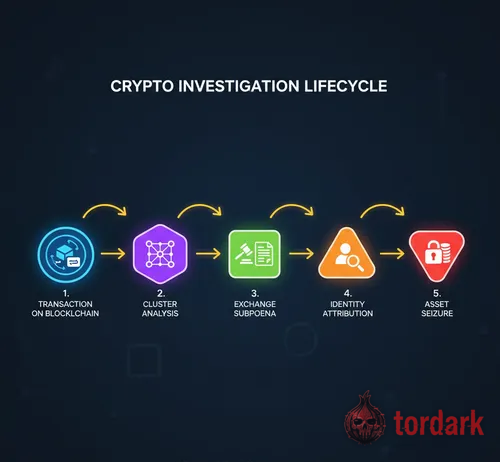
The trouble is that mixing frequently produces the opposite of the intended result. The most common own-goal is mixing and then depositing straight into a regulated exchange: chain-analysis tools flag the deposit as having passed through a mixer, the exchange assigns it a high risk score, and the user ends up with a frozen balance and a demand to explain the source of funds — more scrutiny, not less. The second is over-trusting a custodial service that turns out to keep logs or, worse, exit-scams with the pool. Mixing is a blunt instrument applied after the fact to a coin that was never built for privacy, and the friction it creates with the compliance system is the reason much of the privacy-minded world has moved on to coins and routes that do not leave a mixer fingerprint at all.
The risks unique to mixers

Beyond the legal exposure, mixers carry a specific cluster of risks that other privacy tools do not, and going in clear-eyed about them is the whole point of this section.
- Exit-scam and theft risk. A custodial mixer has your coins outright while it works. Nothing but reputation stops it from keeping them, and mixers have shut down and run with their pools before. Even a service that has paid out reliably for years can do it once. This is the defining risk of the custodial model.
- Logging and deanonymization. A custodial mixer sees both your deposit and your withdrawal. A "no-logs" claim is unverifiable from the outside, and logs can be kept secretly, exposed in a breach, or handed over under legal pressure — which would link the two ends the mix was meant to separate.
- Traceability anyway. Mixing raises the cost of tracing; it does not make tracing impossible. Analysts de-mix transactions by clustering, and by exploiting timing and amount patterns, and a thin pool or a careless withdrawal can leave your coins correlated despite the mix.
- Frozen "tainted" output. The coins you receive carry a mixer association that compliance systems detect, so they can be harder to spend at any regulated venue than the coins you put in — privacy bought at the cost of usability.
- Scam "mixers" and fake KYC. Some sites posing as mixers exist only to steal deposits, and a genuine mixer never asks for identity documents. Any "mixer" that requests KYC is a scam, full stop — the demand is either theft bait or a data-harvesting trap.
One partial safeguard the better custodial mixers offer is the letter of guarantee: a PGP-signed statement of your deposit address and the terms, issued before you send, which gives you proof for a dispute or refund claim. Save it and verify its signature — the same verify-don't-trust discipline as our PGP verification guide. But be honest about its limit: a signature proves what was promised, and proves nothing if the operator simply disappears.
CoinJoin coordinators: the non-custodial alternative
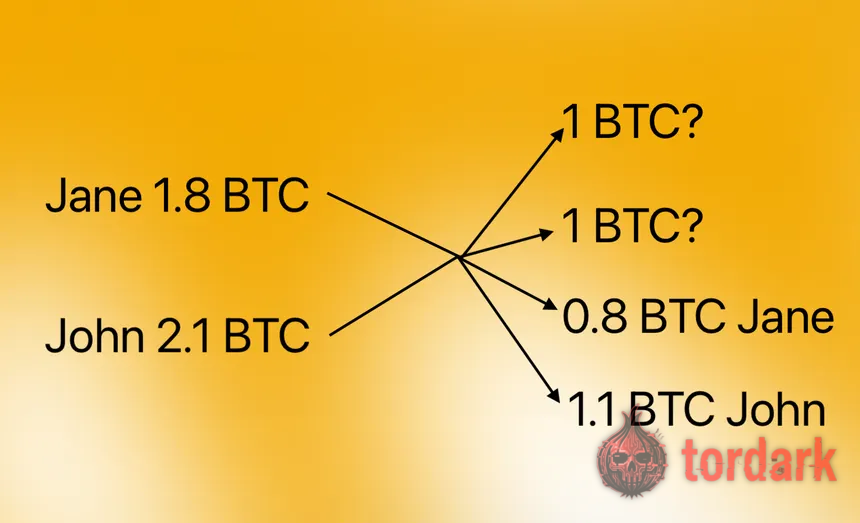
If the defining flaw of a custodial mixer is that a stranger holds your coins, CoinJoin is the answer that removes the stranger. Because participants jointly sign one transaction with identical-size outputs and never surrender their keys, no operator can steal the pool and there is no custodian to keep logs of both ends. After the 2024 actions against Samourai and Wasabi pulled the two dominant implementations offline, CoinJoin now runs largely through independent coordinators that organize rounds for compatible wallets — names that appear on privacy directories include Kruw (coinjoin.kruw.io), Ginger Wallet (gingerwallet.io) and OpenCoordinator (opencoordinator.org), several charging little or no fee.
The honesty this guide owes you is that "non-custodial" does not mean "consequence-free." The June 2025 US Secret Service alert specifically named the most prolific Wasabi-style coordinator as one used by the Lazarus Group to launder funds, which tells you these services are under direct law-enforcement attention even though they never touch your coins. A coordinator can also, in principle, perform analysis on the inputs it sees, so the choice of coordinator matters. CoinJoin is the more robust design — it trades theft risk for cryptography — but it asks for more technical setup, a compatible wallet, and the patience to find enough participants for a strong round. For the user whose only goal is privacy rather than evading a specific investigation, it is the better-engineered tool; for the user who would rather not be on a transparent chain at all, the next section is the real answer.
Mixer, exchanger or Monero? Choosing the right tool

Three tools get confused constantly, and choosing the wrong one is how people take on risk they did not need. The clean way to separate them:
- A mixer keeps you in the same coin and tries to scramble its history. Use case: you must stay in Bitcoin and want to weaken the on-chain link — accepting custody risk and a mixer fingerprint as the price.
- A crypto exchanger converts one coin into a different one with no account. Use case: you want to move value across chains or into a privacy coin quickly. The full landscape — instant swaps, atomic swaps, aggregators and the best no-KYC services — is the subject of our crypto exchangers guide.
- Monero is a coin that is private by design: every transaction hides sender, receiver and amount at the protocol level, so there is no public trail to mix in the first place. Acquiring it is covered step by step in how to buy Monero anonymously.
For most privacy goals, the strongest and simplest move is not to mix Bitcoin but to leave it: convert to Monero through a no-KYC exchanger and hold a coin whose privacy does not depend on a pool's size or an operator's honesty. It is no accident that the surviving darknet markets in our verified directory moved to Monero-only operation rather than relying on Bitcoin mixing — even Hydra, which ran a built-in mixer, was ultimately unwound through the transparent chain it was trying to obscure. A mixer is the right tool only when staying in Bitcoin is a hard requirement; whenever you can leave it, the privacy coin does mixing's job without mixing's risks.
Using a mixer with less risk, if you must
If, having weighed all of the above, a Bitcoin mixer is genuinely the tool your situation calls for, a few disciplines materially reduce the downside. None makes mixing safe — they make it less reckless.
- Reach any service only over Tor, through a link you have verified. Phishing clones of popular mixers are common, and a single wrong character in a domain sends your deposit to a thief. Confirm the address yourself rather than trusting a search result or an ad — the habit our search-engines guide and access guide both press.
- Get and save the letter of guarantee before you send. Verify its PGP signature, and keep it until the mix has fully completed and you have spent the output, so you have recourse in a dispute.
- Start with a small test amount. Run a modest sum through any service before you trust it with more, exactly as you would with any custodian you cannot see.
- Never deposit mixer output straight to a KYC exchange. That is the move that gets balances frozen. If you mix, treat the clean coins as coins to hold or spend privately, not to cash out at a regulated venue minutes later.
- Prefer non-custodial designs where you can. A CoinJoin coordinator or a conversion to Monero avoids handing your coins to a stranger at all, which removes the single largest risk in one decision.
The deeper point is the one this whole site returns to: privacy is a chain of decisions, and the tool is only one link. A perfectly executed mix is undone by a careless cash-out, a clone domain, or a coin that was never built to be private. For most readers the honest conclusion is that mixing transparent Bitcoin is the harder, riskier path to a goal a privacy coin reaches more cleanly — but where Bitcoin is non-negotiable, going in informed, over Tor, with a verified link and a saved guarantee is the difference between a calculated step and a loss.
Common questions about crypto mixers
What is a crypto mixer, and what is a bitcoin tumbler?
They are the same thing under three names — mixer, tumbler and blender are used interchangeably across the industry. A crypto mixer is a service that breaks the on-chain link between the address that sent coins and the address that receives them. Because Bitcoin's ledger is public and permanent, anyone can follow a coin from one wallet to the next; a mixer pools your coins with many other users' coins, shuffles them, and sends back an equivalent amount (minus a fee) of different coins to a fresh address you specify, so the trail appears to stop at the mixer. It changes the history of the same coins; it does not change which coin you hold.
How does a bitcoin mixer work?
In a custodial mixer the flow is simple: you give the service a destination address and send it your coins, those coins drop into a large shared pool, and after a delay the mixer pays you out an equal value in unrelated coins, often split across several payments at randomized amounts and times to frustrate analysis. You never create an account, and the privacy comes from the size of the pool and the randomization. The catch is that for the few minutes or hours the mixer holds your coins, it has full custody — it can keep logs, and it can simply not pay you back. Non-custodial designs such as CoinJoin achieve a similar effect without ever taking ownership of your funds.
Are bitcoin mixers legal?
Using a mixer is not automatically a crime in most countries, but it sits in genuinely contested legal territory and the climate has hardened. Privacy is a lawful motive, yet mixers are also the standard tool for laundering stolen funds, so regulators treat them with suspicion: the US sanctioned the Tornado Cash smart contracts in 2022 (a designation a federal court later overturned, leading to a 2025 delisting), and the operators of services like Bitcoin Fog, Helix and ChipMixer have been prosecuted, while the founders of Samourai Wallet were arrested in 2024 over its CoinJoin feature. Mixing coins you obtained lawfully, for privacy, is different from mixing the proceeds of crime — the latter is money laundering regardless of the tool. Check the law where you live before using one, because the answer varies and is moving.
Is using a crypto mixer safe?
Two different risks sit under that question. Custodial mixers carry counterparty risk: the operator holds your coins mid-mix and can vanish with them, an exit scam that has happened repeatedly, and may quietly keep logs that link your deposit to your withdrawal. Then there is the "tainted output" risk on the other side: regulated exchanges increasingly flag or freeze deposits their chain-analysis tools trace back to a mixer, so coins can come out "clean" of history yet land you in a compliance review when you try to cash out. Non-custodial CoinJoin removes the theft risk but not the flagging risk. There is no mixer that is risk-free, and any mixer that asks for ID is a scam.
What is the best bitcoin mixer?
There is no single best one, and treat every "best mixer 2026" ranking — including the names on this page — as leads to scrutinize, not endorsements, because these lists are heavily seeded by the services themselves. What separates the more credible custodial mixers is a track record measured in years rather than months, a clearly stated no-logs policy, a signed "letter of guarantee" you can verify, and reasonable, transparent fees. Long-running names that recur on privacy directories include Mixer.money, Mixtum and Coinomize; newer multi-coin services like Mixero and Mixer.Black also appear. But the more honest answer for most people is that a non-custodial CoinJoin, or simply moving value into Monero, avoids handing your coins to a stranger at all.
What is the difference between a mixer and CoinJoin?
A custodial mixer takes ownership of your coins, pools them with everyone else's, and sends different coins back — you trust the operator not to steal or log. CoinJoin is a non-custodial technique, used mainly on Bitcoin, where many users combine their payments into one large transaction with lots of identical-size outputs; because the outputs are indistinguishable, an observer cannot tell which output belongs to which input, yet no one ever holds your coins but you. CoinJoin removes the exit-scam risk that defines custodial mixers, at the cost of more setup and the need for a coordinator and other participants. After the 2024 enforcement actions against Samourai and Wasabi, CoinJoin now runs largely through independent coordinators.
Can mixed bitcoin be traced?
Sometimes, which is the uncomfortable truth the marketing leaves out. Mixing raises the cost and difficulty of tracing, but it is not a guarantee of anonymity. Blockchain-analysis firms have developed techniques to "de-mix" some transactions — by clustering addresses, exploiting timing and amount patterns, or following coins out the other side — and law enforcement has unwound mixers after the fact, as the Bitcoin Fog and ChipMixer cases showed. A small pool, a careless withdrawal pattern, or reusing addresses can all weaken the protection. Mixing is a probabilistic obstacle, not an erase button, which is one reason privacy-by-design coins like Monero, where every transaction is shielded at the protocol level, are a structurally stronger tool than mixing transparent Bitcoin after the fact.
Do I still need a mixer if I use Monero?
Usually not, and this is the distinction that saves most people the risk. A mixer is an attempt to add privacy to a transparent coin like Bitcoin after the transaction is already on a public ledger. Monero builds privacy into every transaction by default — sender, receiver and amount are hidden at the protocol level — so there is no public trail to mix in the first place. For most privacy goals, converting to Monero through a no-KYC exchange is both simpler and stronger than mixing Bitcoin, because it does not depend on the size of a pool or the honesty of a mixer operator. A mixer makes sense mainly when you must remain in Bitcoin; if you can leave it, Monero does the job mixing is trying to imitate.
What is a mixer "letter of guarantee"?
It is a digitally signed message a reputable mixer issues at the start of your order, stating the deposit address it gave you and the terms of the mix, and signed with the mixer's PGP key so it cannot be forged. Its purpose is recourse: if the service fails to pay out or pays the wrong amount, the signed letter is your proof of what was promised, and the basis for a refund claim or a public complaint on a forum like Bitcointalk. Save it before you send anything, and verify the signature against the operator's published key. A letter of guarantee is real protection against a dispute — but it is worthless if the mixer simply shuts down and disappears, which a signature cannot prevent.
Will an exchange freeze coins that came from a mixer?
It can, and increasingly does. Regulated exchanges run incoming deposits through chain-analysis tools, and coins whose history touches a known mixer are commonly assigned a high "risk score" that triggers a manual review, a request for the source of funds, or a frozen balance — the opposite of the privacy you were after. This is why mixing and then depositing straight to a KYC exchange is self-defeating: you swap an on-chain link for a compliance flag. If your aim is privacy rather than evading a specific investigation, a no-KYC route avoids the freeze entirely, and a coin that is private by design rather than mixed after the fact does not carry the mixer "taint" in the first place.