 rdark
rdarkDream Market: The Longest-Running Darknet Market's 2019 Fall
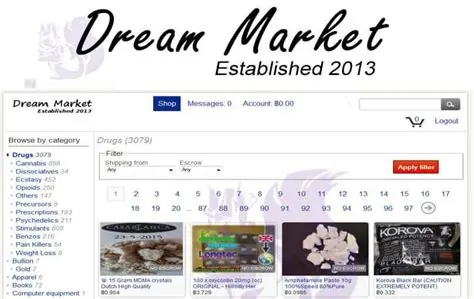
Dream Market was the dark web's great survivor, until survival itself became the warning sign. It traded for roughly six years, outlasting Silk Road's ashes, the 2014–15 scam wave, and the 2017 takedowns that erased its biggest rivals, before announcing its own shutdown in the spring of 2019. If you are searching for a Dream Market link, there is none: the market has been gone since April 2019, and for seven years nobody could say for certain why. Then, in 2026, an arrest finally answered the question. This is the full story, the long run, the messy exit, and what the disappearance still teaches anyone trusting a market today.
How long did Dream Market run?
Almost six years, an extraordinary lifespan in a business usually measured in months. Dream launched around April 2013, weeks before Silk Road's seizure, and kept trading until April 2019, absorbing refugees from every market that fell around it. When Operation Bayonet took down AlphaBay and Hansa in 2017, Dream was the last of the four great post-Silk Road markets left standing, and it inherited their users almost by default. By the end it carried nearly 100,000 listings for drugs and counterfeit documents, run by an administrator known only as "Speedstepper," and it accepted Bitcoin alongside, in time, Bitcoin Cash and Monero.
Longevity built a reputation, and that reputation became the thing users trusted instead of verification. Six unbroken years reads as competence, even safety. But in a market that no one can audit, a long track record only tells you it has not failed yet, not that it never will, and Dream's ending would make the difference brutally clear.
Why did Dream Market shut down in 2019?
The official reason was a siege. For roughly two months in early 2019, Dream was hammered by a relentless DDoS attack; on the forum Dread, the administrator HugBunter relayed that an extortionist was demanding around $400,000 to make it stop, and that Dream's operators refused to pay. In late March a notice appeared announcing that trade was halted and the market would close on 30 April 2019, migrating to a "partner" service at a new URL. That successor never materialised.
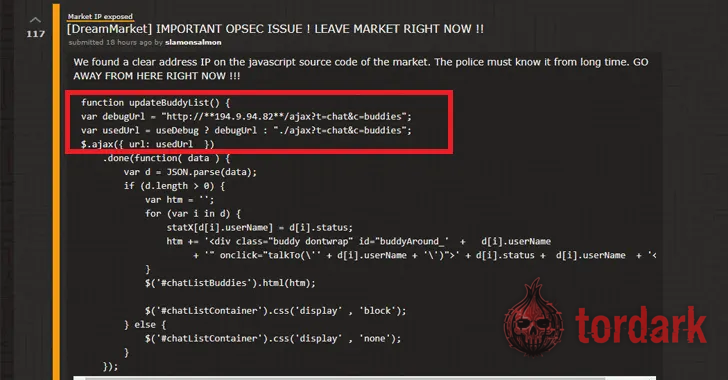
Two details turned suspicion into dread. First, a widely shared warning claimed the market's own JavaScript source code contained a hard-coded server IP address (194.9.94.82), an operational-security failure that, if genuine, meant police could have known Dream's true location for a long time. Second, and worse for anyone hoping to confirm the news, the shutdown announcement was not PGP-signed by the administrator, so no one could verify it had come from Dream's operators rather than from law enforcement. With Europol's Operation SaboTor announcing dozens of dark-web arrests that very week, much of the community concluded Dream had become another Hansa: a honeypot quietly logging everyone who logged in to withdraw.
The truth stayed unknowable for seven years, which is itself the lesson. It resolved only in 2026, when German and US authorities arrested a 49-year-old German man, Owe Martin Andresen, alleging he was Dream's lead administrator "Speedstepper." Prosecutors say he had quietly held the market's commission wallets all along and, in late 2022, used the original private keys to move the funds, ultimately laundering them into roughly $1.7 million in gold bars. An operator keeping the keys and the money points away from a clean police takeover and toward a managed exit under pressure, but in 2019 there was no signature to tell users which it was.
Dream Market alternatives that still work in 2026
Because Dream is long dead, the only useful question is where to trade safely now. The markets actually operating are tracked in tordark's verified darknet market directory, where general-purpose options like Nexus, reported to take Bitcoin, Monero, and Litecoin, and TorZon cover the broad catalogue Dream once did. If Dream's draw was its staying power, note that the survivors earn trust differently now, through privacy and proof rather than reputation alone.
The sharper lesson is about payment. Dream's ambiguous end, and the chain-analysis cases around it, pushed serious markets toward Monero, whose ledger cannot be read the way Bitcoin's can; DrugHub and DarkMatter are reported to settle in Monero only. Whichever you weigh, do the one thing Dream's users never got to do in 2019, confirm the current address against a PGP-signed canary, and keep nothing in escrow beyond an open trade.
Where did the Dream Market link go?
Nowhere good. Dream Market shut down in April 2019 and has not returned; the "partner" successor it promised never appeared, and every "Dream Market reborn," "Dream Market Reloaded," or fresh onion link that has surfaced since is a clone or a cash-grab trading on the name. Any Dream Market link or URL you find today should be treated as a phishing trap, full stop.
Dream's own history is the warning. As it closed, it urged users toward a successor it vouched for, and the wider 2019 churn funnelled many of them into Wall Street Market, which promptly exit-scammed for around $11 million and saw three admins arrested days later through a reused Bitcoin wallet. The pattern is iron: a closing market's "official successor" is exactly where the next loss tends to happen. Trust no link because a dead market, or a forum post, points you to it, verify the operator's signature yourself or walk away.
What Dream Market's quiet exit teaches
Dream is the case that proves an orderly goodbye can still be a warning, and that uptime measures nothing. Six unbroken years did not make it safe; they made it complacent and, eventually, exposed. The defining failure was not the DDoS or even the leaked IP, it was that the farewell could not be verified, leaving an entire userbase to guess for seven years whether they had fled a shutdown or wandered into a honeypot. Contrast that with White House Market, which retired in 2021 with a PGP-signed message anyone could check. Read the surrounding closures in the archive, and take the rule Dream's users learned the hard way: distrust the successor, verify the signature, and never mistake a long track record for a guarantee.
Common questions about Dream Market's shutdown
Is there a working Dream Market link?
No. Dream Market shut down in April 2019 and never returned. The "partner" successor it promised never appeared, and every "Dream Market reborn," "Dream Market Reloaded," or fresh onion link since has been a clone or a scam trading on the name. Treat any Dream Market link or URL you find as a phishing trap, and verify a live alternative instead.
Why did Dream Market shut down?
Officially, because of a relentless two-month DDoS attack: an extortionist demanded around $400,000 to stop, and Dream's operators refused to pay. In late March 2019 they announced trade was halted and the market would close on 30 April, migrating to a new "partner" URL that never materialised. The timing, alongside Europol's Operation SaboTor arrests, and a reported leak of the server's IP address convinced many users that law enforcement was already involved.
Was Dream Market a law-enforcement honeypot?
It was never confirmed in 2019, and that uncertainty was the whole problem: the shutdown announcement was not PGP-signed, so no one could verify it came from Dream's operators rather than the police. The question only resolved in 2026, when authorities arrested the man they identified as Dream's lead administrator, "Speedstepper," who had kept the market's commission wallets and private keys, evidence that points to a managed exit rather than a clean takeover.
How long did Dream Market operate?
About six years, from roughly April 2013 to April 2019, one of the longest runs in darknet history. It outlasted Silk Road's seizure and the 2017 takedowns of AlphaBay and Hansa, becoming the last of the four major post-Silk Road markets left standing.
Who ran Dream Market?
The market was run by an administrator known only as "Speedstepper." In 2026, US and German prosecutors identified him as Owe Martin Andresen, a 49-year-old German national, and arrested him for laundering more than $2 million in Dream commissions, including roughly $1.7 million converted into gold bars.
What can I use instead of Dream Market?
Only a market whose current address you can verify against a PGP-signed canary. The markets operating now are tracked in tordark's verified directory, and the privacy-minded ones settle in Monero rather than the traceable Bitcoin of Dream's era. Confirm the signature first, and treat any "successor" a dead market points you toward as a likely trap.