 rdark
rdarkWe The North Market Link: Verified Onion URL (WTN)

The We The North market link is among the most impersonated in the niche, because a loyal regional following is a profitable thing to phish. Launched in 2021 and built specifically for Canada, We The North, usually shortened to WTN, runs in both English and French, prices in Canadian dollars, and trades on the promise of parcels that never cross a border. It grew up fast in the vacuum left when CanadaHQ closed, inheriting that market's vendors and its users' habits. tordark covers it from the outside, unaffiliated and with no stake in whether you load it. This page records the address currently tracked, the features that make WTN distinctively regional, and how to tell a real WTN link from the clone built to feel like home.
This is the We The North onion address tordark tracks as of June 2026. WTN is a regional market with a small mirror footprint, which makes the one address you have all the more important to get right, and all the more worth faking. Confirm it against the market's PGP-signed canary before you enter anything.
hn2paw7zaahbikbejiv6h22zwtijlam65y2c77xj2ypbilm2xs4bnbid.onion WTN is unusual in also offering access over a standard clearnet domain, which some users find convenient. That convenience is double-edged: clearnet "We The North" domains are the single most abused phishing surface for the brand, and a clone on a `.com` is no harder to stand up than one on an onion. Reach the market over Tor where you can, and verify whatever address you land on, clearnet or onion, before trusting it.
We The North and the CanadaHQ vacuum
We The North launched in 2021 and found its footing when CanadaHQ, the largest Canadian regional market at the time, shut down and left its vendors looking for a home. That migration handed WTN a ready-made user base and a head start that most young markets never get, and it explains the loyalty the brand still trades on. Being Canada-first, it serves users in both English and French, a small detail that signals to its community and, unfortunately, gives a clone one more thing to copy convincingly.
Design-wise WTN is not trying to be novel. It runs the familiar AlphaBay-style theme that a generation of darknet buyers already recognises, which makes it instantly comfortable to navigate and, for exactly that reason, easy to impersonate: when a layout feels like one you have used for years, you scrutinise it less. Comfort and recognition are WTN's product and its central vulnerability in equal measure.
Features built for a regional market
For a regional market, We The North carries an unusually broad feature set. The expected catalogue and a vendor "level" ranking and rating system sit alongside several extras you will not find on most peers. An Autoshop delivers digital goods automatically and instantly on purchase, used mainly for items like credit-card data where buyers want immediate access. A built-in forum hosts discussion inside the market rather than pushing it to Dread. And a Sports Bet Panel, genuinely unusual, lets users wager on sporting events without leaving the platform.
These additions widen what WTN is, and they widen its risk surface too. An instant-delivery Autoshop assumes you are on the real market; run it on a clone and the transaction simply takes your coins. A built-in forum is one more interface a phishing copy reproduces to feel authentic. The features are a reason the community stays, not a reason to relax the verification habit, which matters more on a market that gives you this many places to act.
Payment, escrow, and security
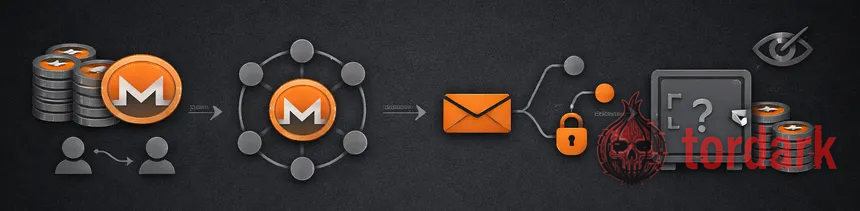
We The North accepts Bitcoin and Monero, deposited into a built-in wallet rather than paid directly, with no early finalization offered. Both coins work, but they are not equal: Bitcoin's ledger is public and permanent, while Monero is built to resist the chain analysis that has been turned against users for years, so default to XMR if you transact. Prices are shown in Canadian dollars, a regional touch that fits the rest of the design.
On protection, WTN is middling and worth understanding plainly. Funds sit in a traditional internal escrow rather than multisignature, which means the market holds the keys and a pooled balance is, as ever, what an exit scammer would empty. It enforces PGP for communications, which is a genuine strength, but is reported to offer no two-factor authentication, which is a real gap, and it runs without JavaScript. With no multisig, no 2FA, and no early finalization, your main defences are your own operational security and the escrow window, so keep balances small and withdraw the moment an order settles.
A regional brand is a phishing magnet
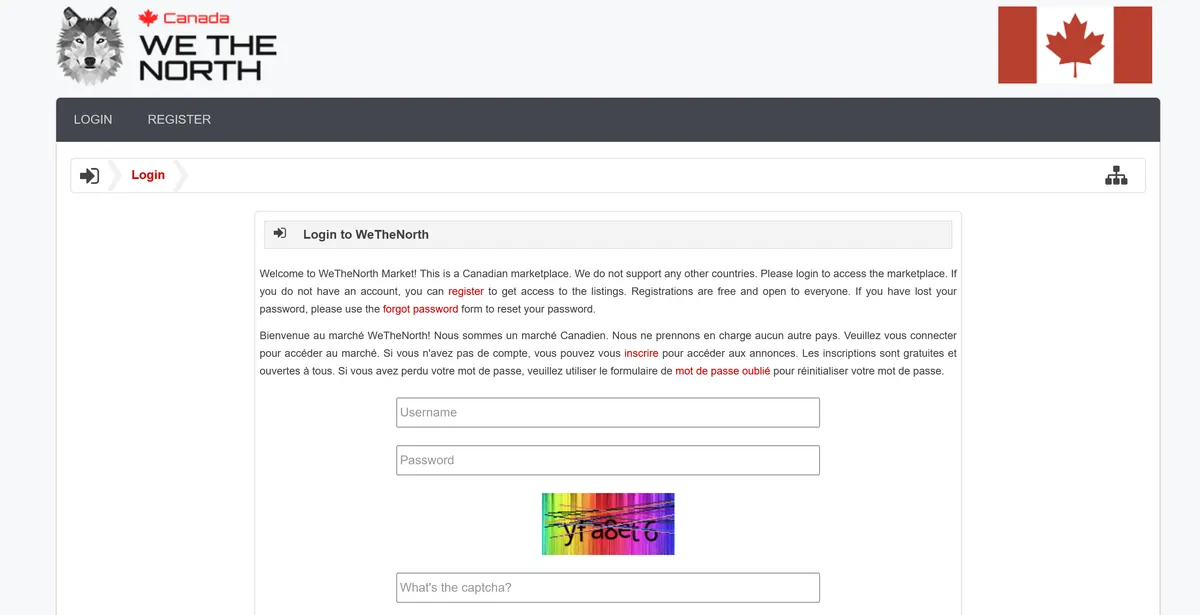
A Canada-first, bilingual identity is what makes We The North recognisable, and recognition is the very thing a clone borrows. A tight community surfaces scam warnings quickly, which helps, but the same familiarity lowers users' guard, which hurts more. A clone can speak both languages, copy the wolf and the maple leaf, and reproduce the layout down to the spacing; what it cannot do is sign with the market's private key. Regional familiarity is not verification, and feeling at home is not the same as being on the real address. The same trap catches users of any well-known market, TorZon included, where name recognition does the phishing operator's work for them.
Reviews, Reddit, and early warnings
We The North reviews circulate widely on Reddit and darknet forums, and they earn their keep for exactly one thing: early warning. A sudden run of "withdrawals are stuck" posts is worth heeding, because that is how an exit scam opens, the way Empire's did before it vanished with roughly $30M in 2020. What a review cannot do is verify an address, and the link tucked inside a glowing post is the commonest phishing delivery there is. Read the sentiment, ignore the embedded links, and confirm any address yourself. A market's reputation is the cheapest thing for a scammer to buy and the first thing they spend on.
Account safety and what the record predicts

A regional market with a strong community carries a particular hazard: members grow comfortable, and comfort leaks information. Use an account name and password that share nothing with any identity you use elsewhere, because a seized market database becomes evidence overnight, and a reused handle quietly links your orders to the rest of your life. With no 2FA to lean on, that discipline is not optional here.
The record of closed markets is the best predictor of how this ends, and it points one way: disappearance. Of the major markets that have shut down, only White House Market wound down cleanly, with a PGP-signed farewell in 2021; the rest were exit scams like Empire in 2020 or seizures like Hydra in 2022 and Archetyp in 2025. A regional brand and a loyal base change none of that, because escrow is escrow and a server can be seized in any country, Canada included. Treat WTN as a market on borrowed time: hold funds in escrow only as long as a trade needs, withdraw promptly, and keep no more than you can lose.
Don't let the flag stand in for the signature
Confirming a We The North address is the standard signature check, set out in full in our PGP verification walkthrough: import the market's key from independent sources, fetch the signed mirror message, and confirm the signature before the page is allowed to matter. The regional angle is the only twist worth naming twice: do not let a familiar accent, a national flag, or a clearnet domain stand in for the cryptography. A We The North onion, or clearnet address, is genuine only when the signed list covers it, so an address the canary omits is a trap, not a spare door. Validate the signature every time, because a clone that gets the culture exactly right is still a clone if the key is wrong.
Common questions about We The North
What is the current We The North link?
We The North is reached over Tor; the onion address tordark currently tracks sits in the address panel above. WTN is among the most impersonated names in the niche because its loyal Canadian following is profitable to phish, so confirm any address against the market's PGP-signed canary before you enter credentials, however familiar the page looks.
Is We The North only for Canada?
Effectively yes. We The North is built around Canadian domestic trade, with prices in CAD and an English-and-French interface, and its appeal is that goods ship within Canada rather than crossing a border. That regional focus is the draw and the risk at once: a recognisable national brand is a richer target to impersonate.
Does We The North have a clearnet site?
WTN is unusual in offering access over a standard domain as well as Tor, which some users find convenient. Treat that convenience with suspicion, because clearnet "We The North" domains are also the single most abused phishing vector for the brand. Whether you arrive over Tor or clearnet, the address only counts once a signature clears it.
Does We The North use multisig escrow or 2FA?
No on both. WTN relies on a traditional internal escrow rather than multisignature, with no early finalization, and it enforces PGP for communications but is reported to offer no two-factor authentication. That makes your own operational security and the escrow window your main protections, so keep balances small and withdraw promptly.
What is the Sports Bet Panel, and what else does WTN offer?
Beyond the usual catalogue, We The North runs some unusual extras: an Autoshop that delivers digital goods like credit-card data instantly, a built-in forum for discussion, a vendor "level" ranking and rating system, and a Sports Bet Panel where users wager on sporting events. The features add reach; none of them changes how an address is verified.
How do I tell a real We The North address from a clone?
Only the signed list tells you. Validate any address against the market's PGP key, and a clone fails instantly, because it cannot forge the signature no matter how perfectly it copies the bilingual interface, the wolf, and the maple leaf. An address that is not in the signed canary is not the market, regardless of how right it feels.